
Managing Managers: What Changes When You Lead Leaders Instead of Doers
Managing Managers: What Changes When You Lead Leaders Instead of Doers
Managing managers means your results come through other leaders, so your job becomes setting direction they can repeat, giving each manager decisions to own, coaching how they lead and reviewing their leadership as well as their results. Edelman found trust in direct managers fell from 79% to 72% in 2026, so those managers need your support.
Key takeaways
When you manage managers, your results come through other leaders, so your work becomes direction, decision rights and developing the people who lead your teams.
Three habits cause the most trouble in this role: solving problems for your managers, going to their teams directly, and judging managers on the job you used to do.
Edelman’s Trust at Work 2026 study of more than 10,000 employees in ten markets found trust in direct managers fell from 79% to 72%, a record low in its data.
Korn Ferry found 91% of more than 1,300 talent and senior leaders say coaching and people skills will become more important.
Four moves help: set direction your managers can repeat, give each manager decisions to own, coach each manager on how they lead their team, and review how each manager leads.
Related UNLEASHED episode: Mickey Anderson on why only 46% of employees strongly agree they know what’s expected of them, and what leaders can do about it.
What changes when you start managing managers?
When you start managing managers, your results depend on how well other leaders lead, so the work you’re judged on changes. You set the direction your managers work toward, decide which calls belong to each of them, and develop them as leaders, while they lead the work with their own teams.
Many leaders reach this role because they were very good managers. The skills that earned the promotion, such as answering questions quickly, knowing every client and catching problems in the work yourself, start to cause trouble when you use them with your managers’ teams. If your own team simply grew, our post on what to change first when your span of control grows covers that change. This post covers a different one, when the people who report to you lead teams of their own.
The managers you lead also face more strain than they did a few years ago. Edelman’s Trust at Work 2026 study, published October 6, 2026, surveyed more than 10,000 employees across ten markets and found trust in direct managers fell from 79% to 72%, a record low in Edelman’s data. The same study found 86% of mid-level managers had experienced at least one transformation at work in the past 12 months, such as a strategy shift or the introduction of AI. Your managers are leading their teams through that change, and the support they get from you affects how well they do it.
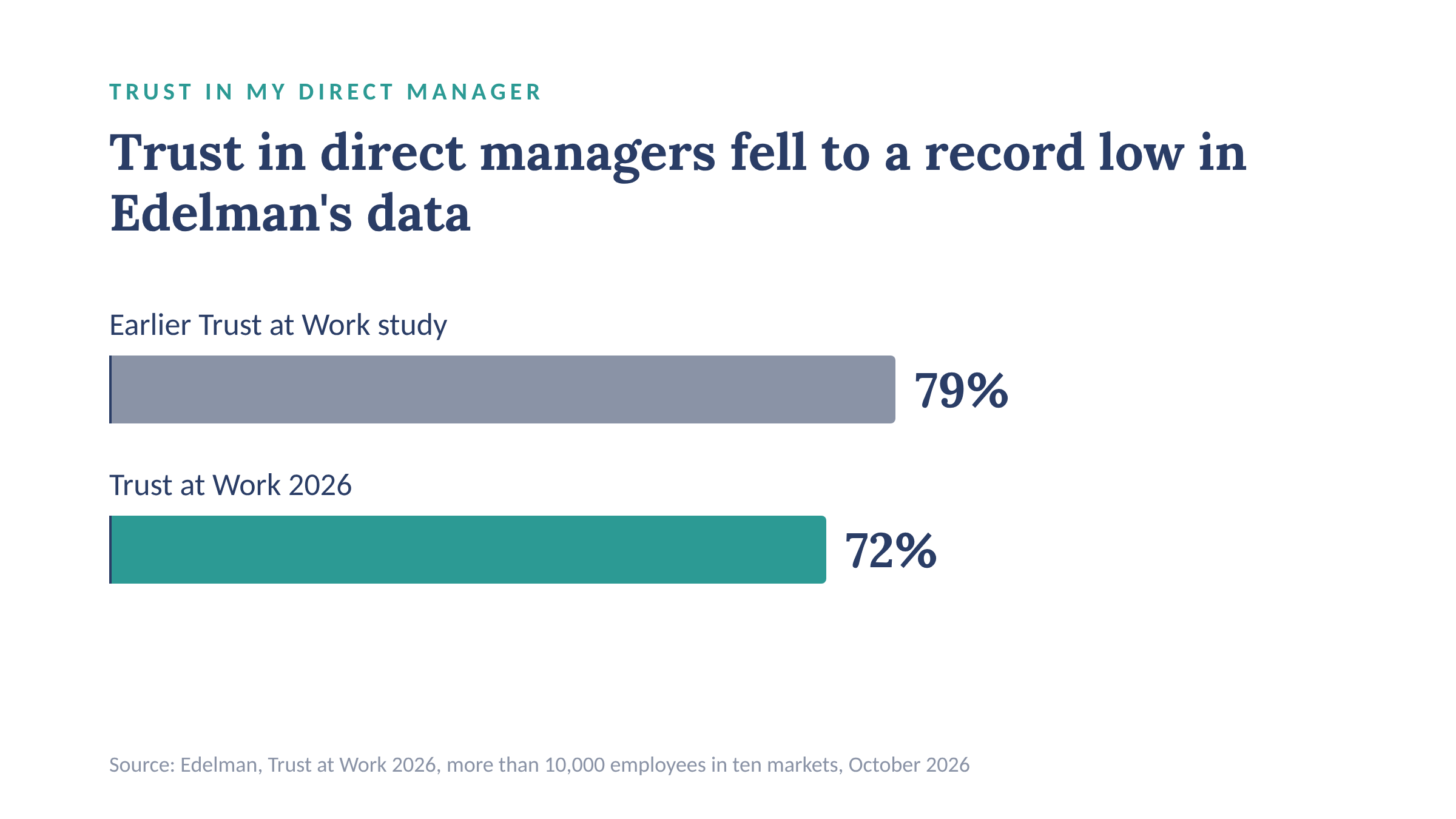
Edelman’s Trust at Work 2026 study found trust in direct managers fell from 79% to 72%, a record low in its data.
Which habits cause problems for leaders who manage managers?
Three habits cause the most trouble for leaders who manage managers, and each one comes from a skill that worked when they led a team directly. Each habit also teaches your managers to wait for you.
Solving problems for your managers
When a manager brings you a problem, it’s faster to answer it yourself, especially when you’ve solved the same problem before. Each time you do, the manager learns the next problem should come to you too, and their team learns their manager can’t decide it.
Sydney Finkelstein, a professor at Dartmouth’s Tuck School of Business, described a different habit in a long-standing 2021 SHRM article on managing managers. When one of his managers asks for advice, he first asks how they thought about the problem, what they’ve already looked into and what’s stopping them. He explained that the lesson for the manager is how to work with their own team members in the same way.
Going to their teams directly
Asking a manager’s team for an answer feels efficient, because you get what you need without waiting. It also tells the team their manager isn’t the person who decides, and it leaves the manager without the information you just collected. Talking with the people on your managers’ teams is useful when your purpose is to listen, and it causes problems when you give them direction or decisions their manager should be giving.
Judging managers on the job you used to do
Many leaders judge their managers on the work they were known for themselves, such as technical quality, client relationships or speed. Those results still matter, and they say little about whether the manager leads well. A manager can deliver strong numbers while doing much of the team’s work personally, and that team won’t be ready when the manager’s role grows.
What do leadership competencies have to do with managing managers?
A leadership competency describes one part of good leadership as behaviours other people can see. When you manage managers, the behaviours that matter most change, because the people watching you are leaders who’ll copy how you lead them when they lead their own teams.
Our Leadership Competency Model describes ten competencies, and the Leadership Competency Assessment scores each leader on them, from the leader’s own view and from observers who work with them. Naming the competency turns “my managers keep bringing everything to me” into something you can practice and score again in six months. Three competencies matter most when you lead leaders:
Sets Clear Direction. Each of your managers can explain where the organization is going, what matters most for their team this quarter and why, in their own words, and they make decisions with it without checking with you first.
Builds Ownership and Accountability. Each manager owns the outcomes for their area and the decisions that come with them. When something slips, you ask the manager what they’ll do and coach them on their plan, so the work and the decision stay with them.
Develops the Next Leaders. Each manager knows which leadership competencies they’re working on, gets regular coaching from you on them, and helps someone on their own team build theirs.
How do you manage managers well?
Four moves help the managers you lead own more of the work. Each one gives a manager something they can act on without waiting for you.
1. Set the direction your managers can repeat
Your managers can only make good calls for their teams if they know where the organization is going and what matters most right now. Write the direction for the next quarter in a few sentences, share it with your managers, and ask each of them to explain it in their own words and say what it means for their team. If two managers describe it differently, the direction needs work before their teams hear it. Our Clear Intent Builder turns that direction into four statements your managers can repeat.
2. Give each manager decisions to own
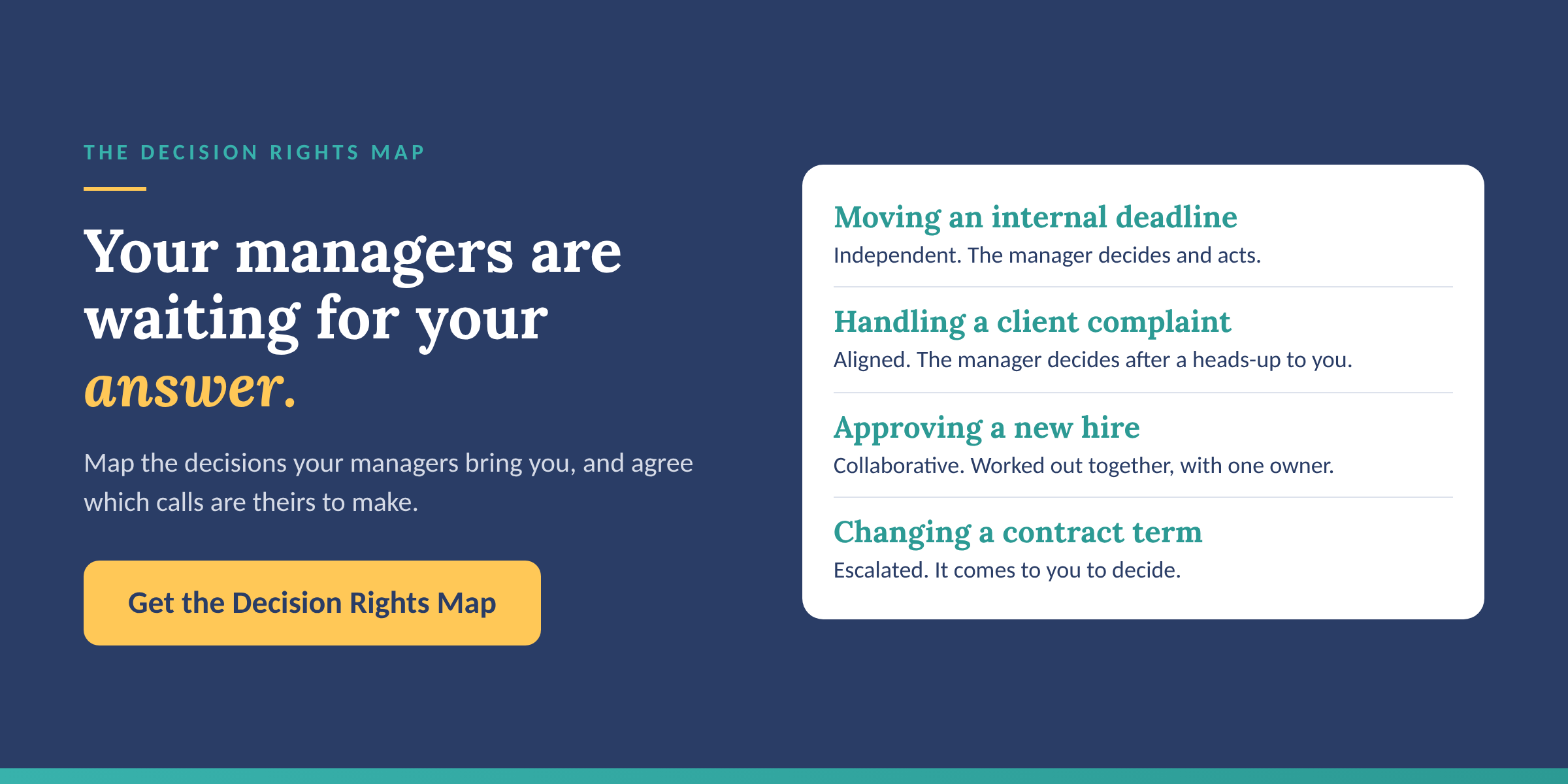
List the decisions your managers bring to you most often, such as approving a hire, moving a deadline or handling a client complaint. For each one, agree who decides and when it comes to you, and write it down. When a manager then brings you a decision that’s theirs, ask what they’d decide and let them make the call.
3. Coach the manager on how they lead their team
When a problem comes up on a manager’s team, work on it with the manager. Ask how they’re thinking about it, what they’ve tried and what they need, and let them act on it with their people. It’s slower the first few times, and it’s how the manager gets better at the problem you used to solve. Korn Ferry’s survey of more than 1,300 talent and senior leaders across more than 75 countries, released October 22, 2026, found 91% say coaching and people skills will become more important.
4. Review how each manager leads as well as what their team delivers
In your regular one-on-ones with each manager, set aside time for how they’re leading as well as their results. Ask which decisions their team made without them this month, who on their team is growing and what they’re working on as a leader. Agree one competency for each manager to practice for the quarter, and check in on it every month.
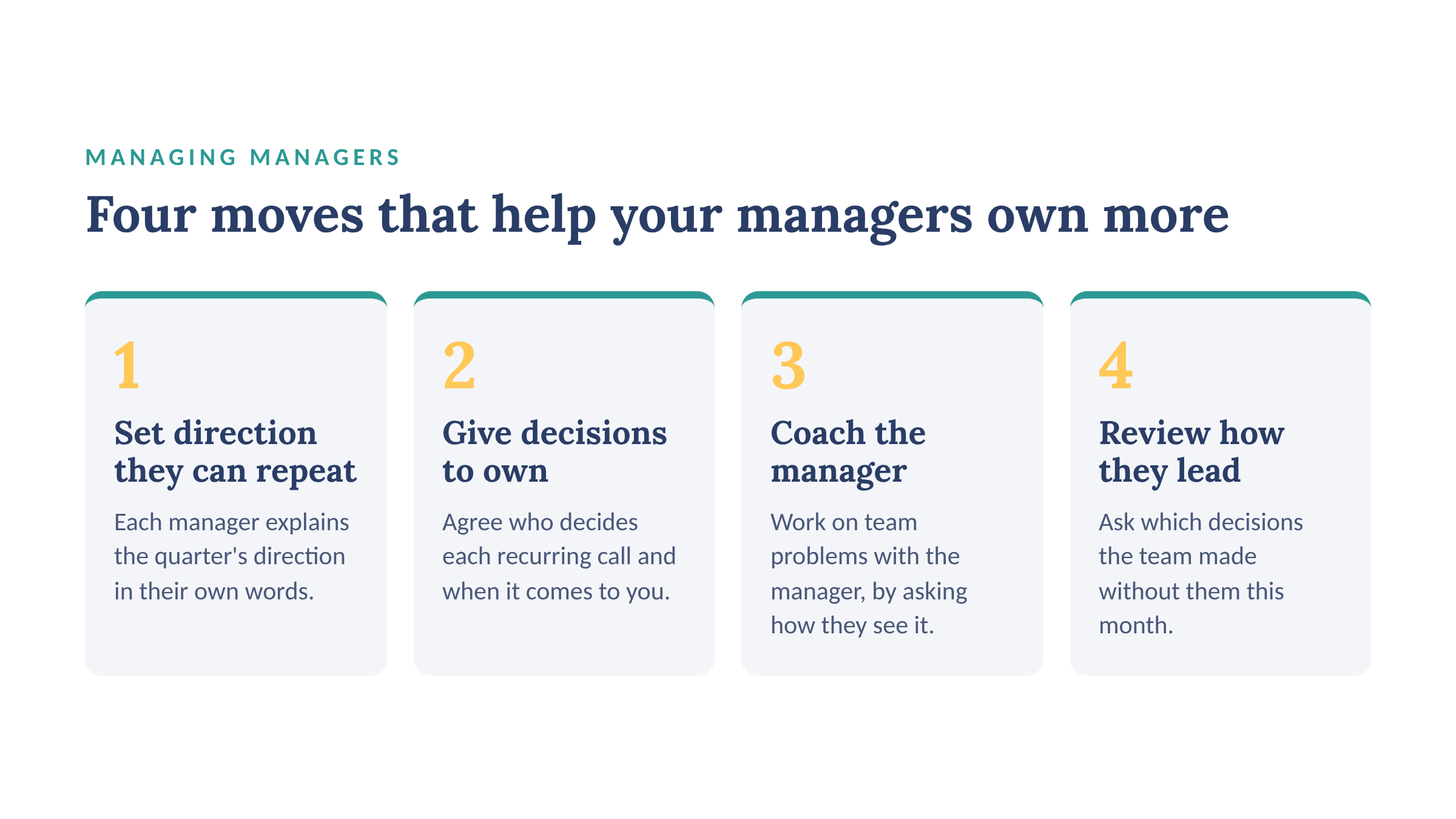
Four moves for managing managers, from setting direction they can repeat to reviewing how each manager leads.
How do you know managing managers is working?
You’ll know it’s working when decisions get made without you, your managers describe the direction the same way, and problems reach you with a recommendation attached. Look for these signs over a quarter:
Your managers bring you fewer decisions, and the ones they bring are the ones you agreed should come to you.
Each manager can explain the quarter’s direction in their own words, and their explanations match.
Problems arrive with the manager’s recommendation, instead of a question about what to do.
Each manager can name one person on their team they’re developing and what that person is working on.
Your managers’ scores from the people who work with them change on the competencies they practiced.
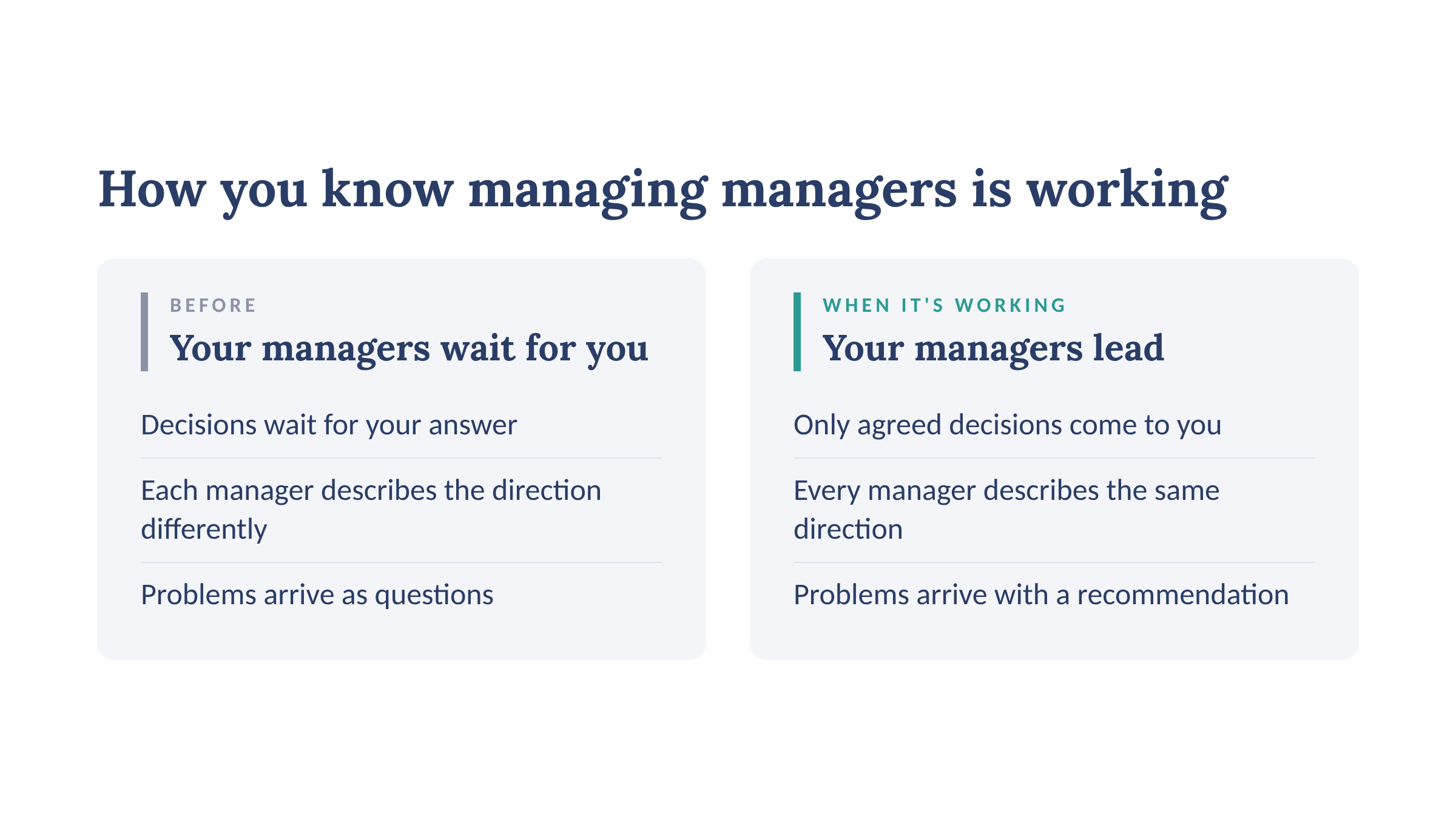
Signs managing managers is working: fewer decisions wait for you, direction matches and problems arrive with a plan.
What does managing managers look like in an organization of 30 to 300 people?
In an organization of 30 to 300 people, the first leaders who manage managers often built the company’s early teams, and their managers were promoted from those same teams. That history makes the three habits more likely, because the leader knows the work and the people well, and the people are used to going to that leader for answers.
At this size, one leader of managers can affect how most of the company is led. Our post on why employees don’t want to be managers covers what people watch in their own managers before they decide whether to lead. Our 1:1 Leadership Development works with individual leaders over months on the competencies their scores show they most need, with the assessment at the start and the end, and our Leadership Team Development does the same for leaders who lead together as a team.
Frequently asked questions
How do you manage managers?
Set the direction your managers can repeat, give each one decisions to own, coach each manager on how they lead their team, and review how they lead as well as what their team delivers. The goal is for your managers to make good decisions for their teams without waiting for you, and to develop the people on their own teams.
What’s the difference between managing people and managing managers?
When you manage people, you direct the work and develop the people doing it. When you manage managers, your results come through other leaders, so you set direction, decide which calls belong to each manager and develop them as leaders. Solving problems for their teams, which worked when you managed people, now leaves your managers without the practice they need.
What skills does a manager of managers need?
A manager of managers needs to set direction other leaders can repeat, let each manager make the decisions that are theirs, coach by asking questions before giving answers, and judge leaders on how they lead as well as their results. In our Leadership Competency Model, these show up as Sets Clear Direction, Builds Ownership and Accountability and Develops the Next Leaders.
How do you develop the managers who report to you?
Agree one or two leadership competencies each manager will work on, give them real decisions that let them practice those competencies, and coach them in your one-on-ones by asking how they thought about a problem before you offer a view. Score them at the start and again after six months, from their own view and from the people who work with them.
Help your managers lead without waiting for you
If your managers keep bringing you the decisions their teams need, a conversation with us can help you see which leadership competencies to develop first, in you and in the managers you lead. LoyaltyOps is a leadership development firm that develops individual leaders and leadership teams against clear leadership competencies, so performance improves across your organization.
Sources
Edelman, R. “Trust at Work: Transformation Triggering Trust Demise.” Edelman, October 6, 2026. Trust at Work study of more than 10,000 employees across ten markets. https://www.edelman.com/newsroom/richard-edelmans-6am-blog/trust-at-work-2026
Janzer, C. “How to Manage Managers.” SHRM, July 14, 2021. Quoting Sydney Finkelstein, Tuck School of Business at Dartmouth. https://www.shrm.org/mena/topics-tools/news/managing-smart/how-to-manage-managers
Korn Ferry. “Korn Ferry Report: AI and Capability Gaps Will Reshape Talent in 2027.” Press release, October 22, 2026. Survey of more than 1,300 talent and senior leaders across more than 75 countries. https://www.kornferry.com/about-us/press/korn-ferry-report-ai-and-capability-gaps-will-reshape-talent-in-2027
Related episode: UNLEASHED by LoyaltyOps, “Only 46% Strongly Agree They Know What’s Expected,” November 5, 2026. https://youtu.be/IPrxQT95VIQ