
LEADERSHIP COMPETENCY ASSESSMENT
See how you really lead, and exactly what to practice next.
Get honest answers from the people who see you lead every day, and find out which behaviours will earn you more respect, authority and time.
For CEOs, senior leaders, managers and fractional executives, with your debrief included, and you decide who sees your results. Also available for executive teams of four to eight.
The more senior you get, the less you hear about how you really lead.
The feedback you get is rare, and what you do get is too vague to act on, like "be more strategic." So you put your effort into the wrong things, and a year later no one can say what changed.
As a CEO or owner, you'll see why decisions still wait for you, from the executives and people who see you lead, and which behaviours will let them decide without you.
As a senior leader, you'll turn vague feedback like "more executive presence" into the specific behaviours your boss, peers and team see, and learn which ones earn you their backing.
As a manager or new leader, you'll hear what your team rarely says to you directly, including why problems go to your boss first, and where to start.
As a fractional executive, you'll have evidence you can share with the CEO, so your leadership is judged on what people actually see.
You've put in years of effort. You deserve an honest answer about how people experience your leadership, and proof when it changes.
Built so you can act on your results the week you get them.
You see exactly what's expected of a leader at your level.
Each competency is based on published research and shows in specific behaviours, so vague feedback turns into something you can practice.
Every score points to something to practice.
Every question asks about one behaviour people can see, so each score points to something specific you can practice the same week.
Practice that fits into a full week.
You practice the behaviours in the work you already do, with no courses to sit through, and the people who see you lead every day see the practice as it happens.
Bought online, with nothing to set up.
You buy it online and we send the links, with no software to learn and no one to train or certify. Your report is ready within three working days after everyone has answered.
See what changed, behaviour by behaviour.
Take it again within 15 months and your report compares your new results with your earlier ones, behaviour by behaviour, so you have evidence of what changed to show your boss, your board or your clients.
Evidence about how you lead, and a clear plan for what to practice.
Your report is concise and clear, and it ends with a plan of which behaviours to practice and in what order, so you understand your results quickly and know exactly where to start.
A debrief
A conversation with Mickey Anderson that talks through your results and your plan, so you leave knowing what to practice first.
In your own private portal
Your Results Report, kept where only you can see it.
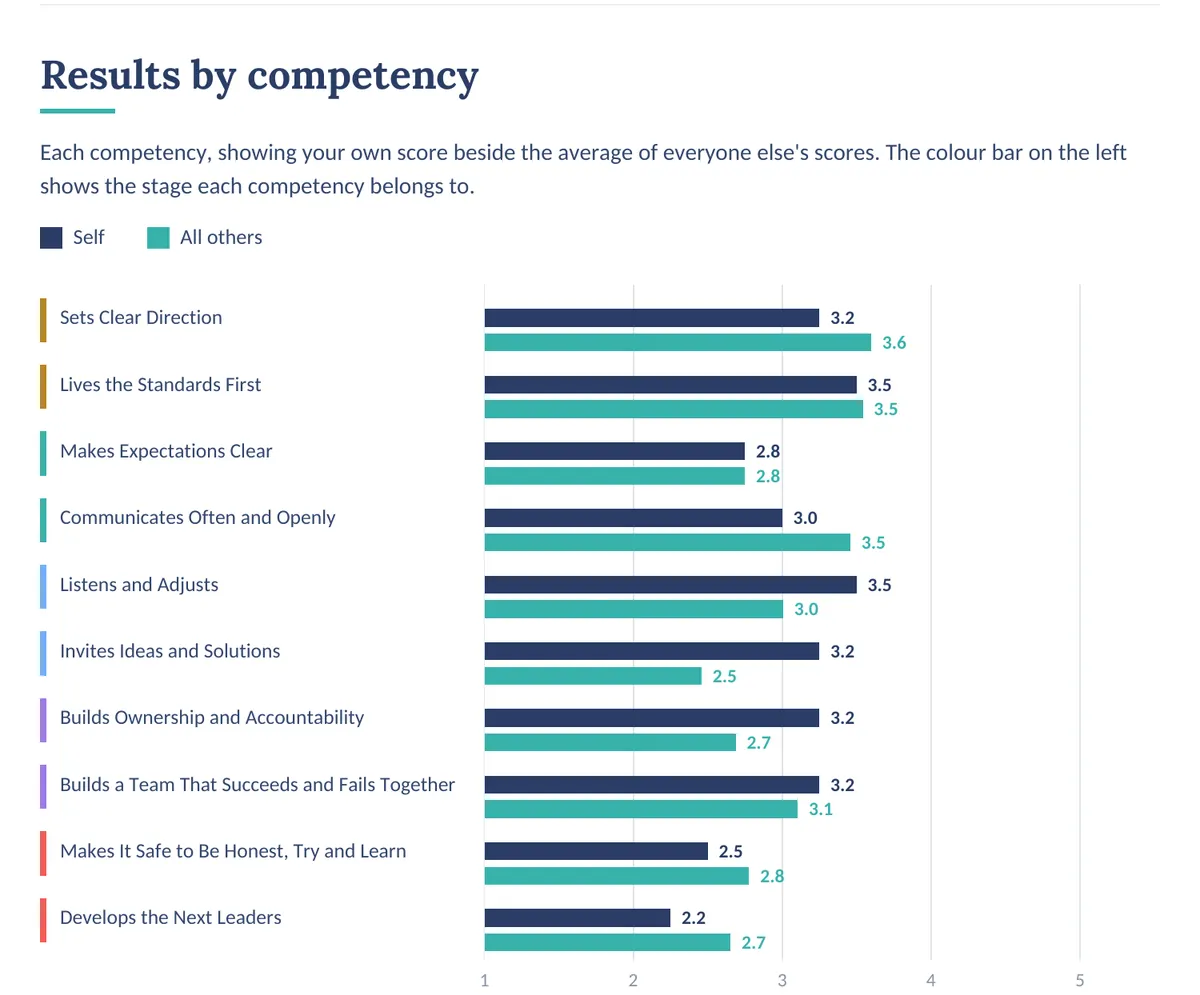
Your results for every behaviour
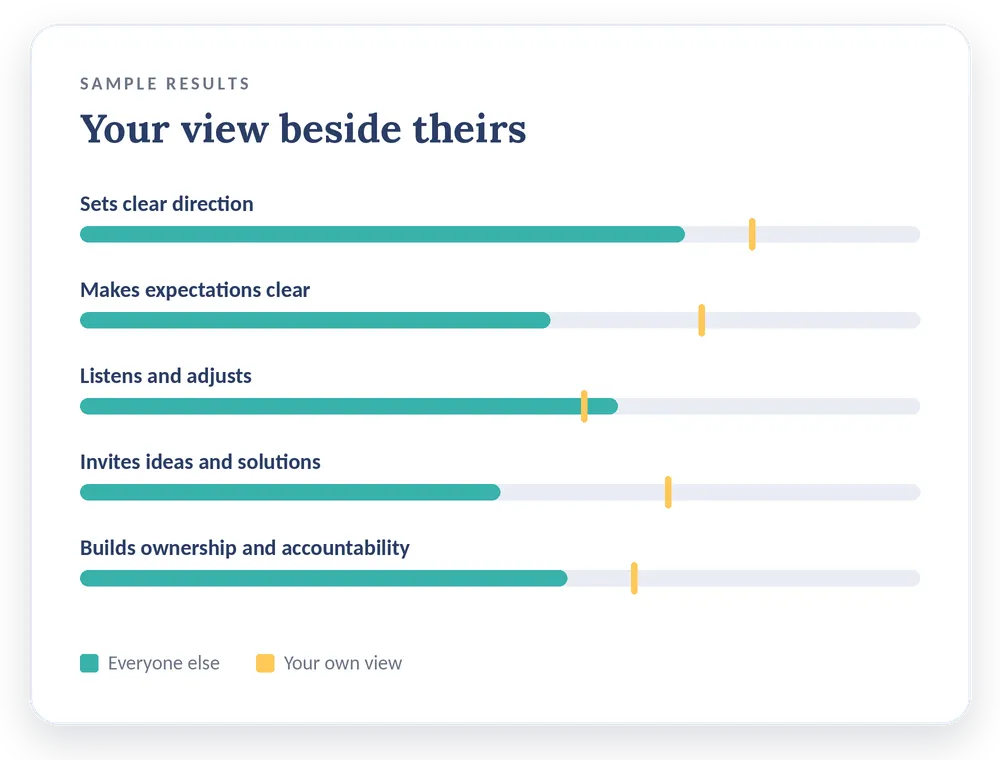
How the people around you see your leadership, next to how you see it.
Your strengths
The behaviours people see consistently, so you keep using what works.
The biggest gaps
Where your view and others' views differ most.
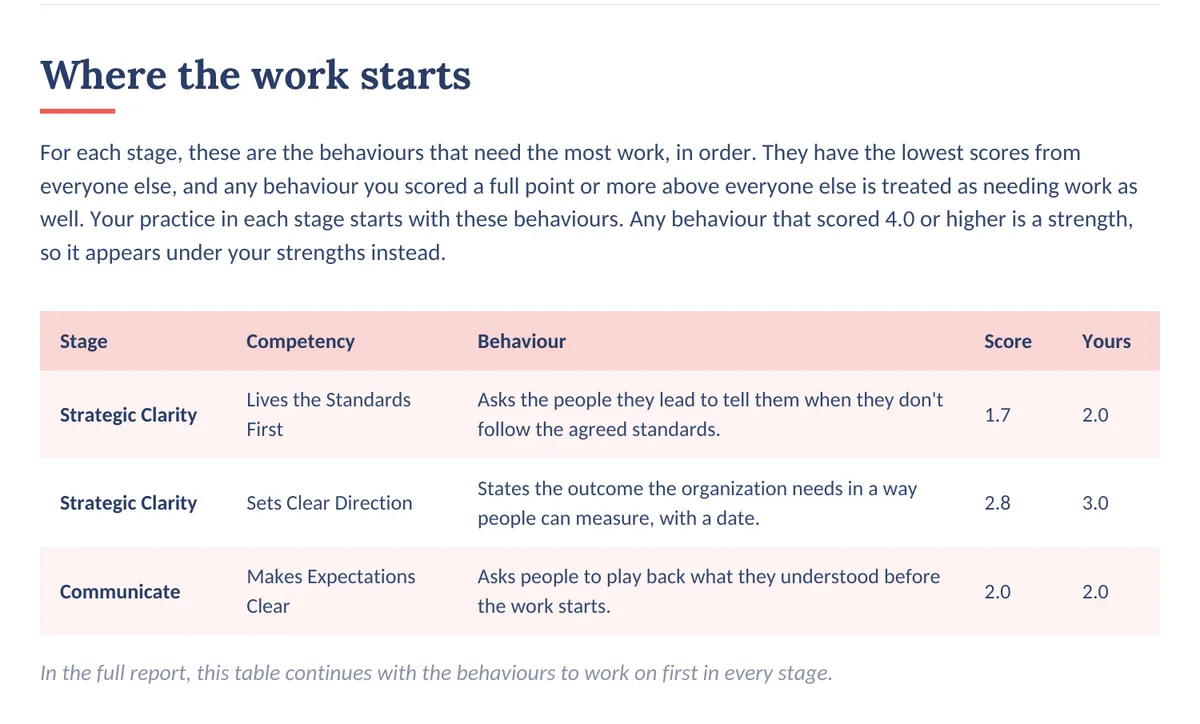
Where to start
The behaviours to work on first, based on what the people around you see.
In their own words
What the people around you described about your leadership.
A plan for the year ahead
Which behaviours to practice, and in what order.
It measures each stage of leading, starting with the direction you set.
The LoyaltyOps Leadership Competency Model has five stages. Strategic Clarity comes first, then Communicate, Collect, Commit and Continuously Improve, which repeat because leading is ongoing work. Each competency shows in behaviours people can see you do.
Strategic Clarity
Setting the direction and the standards everyone works by.
Communicate
Making expectations clear and keeping everyone informed about where things stand.
Collect
Finding out what's really happening, and gathering ideas and feedback from the people doing the work.
Commit
Building ownership, accountability and teamwork, so people deliver what they've agreed to.
Continuously Improve
Learning from the work and developing people.
There are two versions, one for CEOs, founders and owners and one for leaders inside an organization, so you're assessed on the job you really do.
See every competency in the model on How We Help.
Every question is about something people can see you do.
Here are four of the behaviours in the assessment.
- Shares bad news as early and as plainly as good news.
- Asks people to play back what they understood before the work starts.
- Tells people what happened to the idea they raised, including when it isn't used.
- Responds to a missed commitment the same calm way every time, focusing on the plan and what the person needs.
Each person scores what they've actually seen in the last three months, and writes one real example for each competency.
How each behaviour is scored
1 Not seen. You haven't seen this behaviour when there was a chance to.
2 Rarely. You seldom see it, or you only see it when things are easy.
3 Sometimes. You see it, and it isn't consistent yet.
4 Usually. You see it most of the time, including under some pressure.
5 Consistently. You see it every time, including under pressure, and other people have started to copy it.
N Haven't had the chance to see this. It's left out of the results, so it never lowers a score.
See exactly what you'll get before you buy.
Look through a preview of the report for a fictional leader, built with the same tools and rules as a client report. You'll see how results are shown, where the work starts and what the plan for the year ahead looks like.
Get your FREE Assessment Report Preview
From the problem you name to the scores that show what changed.
Every score in your report traces back to something you want to change, so you know why each behaviour matters and where you'll see it change.
1
The problem, in your own words
At the end of your self-assessment, you answer a few questions in your own words, including where you most want to improve as a leader.
2
The leadership competencies it traces to
Your report connects your answer to the leadership competencies behind it.
3
The behaviours people can see
Each competency is made up of behaviours your observers can see you do, so you know exactly what to practice.
4
Your scores, at the start and on your next assessment
Take it again within 15 months. We count a change as meaningful when the people who work with a leader score a competency at least half a point higher, on a five-point scale, than they did at the start.
Six common problems, traced to what you can practice.
Your team brings you decisions they could make themselves.
Competency: Makes Expectations Clear
Behaviour to practice: Makes sure each person knows what they're allowed to decide and use to deliver their outcome, such as budget, tools, people to ask for help, and the limits they work within.
Your team works hard on the wrong priorities.
Competency: Sets Clear Direction
Behaviour to practice: Names the few priorities that matter most right now, including what won't be worked on.
Problems reach your boss before they reach you.
Competency: Listens and Adjusts
Behaviour to practice: Sets up regular ways for problems and risks to get to the people who can act on them.
Your peers hear about your team's decisions too late to back them.
Competency: Communicates Often and Openly
Behaviour to practice: Makes sure everyone affected by a decision or change hears about it, including other teams.
Your team agrees in the meeting, then does it their own way.
Competency: Builds a Team That Succeeds and Fails Together
Behaviour to practice: When the team makes a decision, makes sure every view is heard and then everyone commits to it, including people who disagreed.
Your team repeats the same mistakes on every project.
Competency: Makes It Safe to Be Honest, Try and Learn
Behaviour to practice: Holds reviews of finished work that find what happened and why, and end with a change that has an owner and a date.
The assessment measures leadership competencies. Your business results stay yours to track, in the numbers your company already uses.
Your debrief is with someone who has led at your level.
Mickey Anderson, our Co-Founder, has led as a founder, general manager and senior leader, in companies across more than 40 industries, from startups to $300 million. She's a Certified Executive Coach, and she knows how rare honest feedback becomes once people depend on you.
Start with your own assessment, or assess your whole leadership team.
Single Leader Assessment
$600
Best for you, if you want to know how the people around you really experience your leadership, whether you pay for it yourself or your company does.
- Your own self-assessment, so you can see where your view of your leadership lines up with what others see, and where the gaps are.
- Responses from up to 15 people who see you lead, including your supervisor, peers and the people you lead, so you hear what people rarely say to your face.
- A Results Report with a plan for the year ahead, in your own private portal, so you know exactly which behaviours to practice first and in what order.
- A 45-minute debrief, so you understand what your results mean and leave knowing where to start.
Team Assessment
$600 per leader
plus a $500 team fee
Best for leadership teams of four to eight leaders, including the CEO, in organizations under 300 people.
Every leader is assessed by the rest of the leadership team and by the people they lead, so you see how leaders experience each other as well as how their people experience them.
Each leader gets their own private report and a 45-minute debrief, so every leader knows what to practice, and their scores stay theirs.
Shared team results with no one named, so the team can talk openly about where it's strong and where it has gaps.
A 60-minute team debrief, so the whole leadership team leaves with a shared view of where to focus first.
A team of four is $2,900, and a team of eight is $5,300. If your team starts Leadership Team Development within 90 days, your results become its starting assessment, so the engagement is $600 less per leader.
Three steps to a clear plan.
1
Complete your self-assessment.
Answer questions about your own leadership, which takes about 35 to 40 minutes, and send your observer link to the people who see you lead. They take about 25 to 30 minutes each.
2
Get your report in your portal.
Your Results Report is ready in your private portal within three working days after everyone's answers are in.
3
Debrief and start your leadership development.
Your debrief talks through your results and your plan, so you know exactly which behaviours to practice first.
Built on research, and on what people actually see you do.
Your view beside what others see
Each response describes how often a behaviour is seen and whether it holds under pressure, so a leader can compare what they believe they do with what the people around them see, and know which gaps to close first.
It's research-based
Every competency and behaviour in the assessment is based on published research on what makes leaders and teams effective, so you know what's being measured matters.
People can answer openly
Each group appears in a report on its own only once enough people have answered, and apart from a supervisor's, names never appear.
Only what people have seen counts
Anyone who hasn't had the chance to see a behaviour can say so, and that response is left out of the results.
Your results belong to you.
In an individual assessment, you decide what to share. Whoever paid is told only that the assessment was completed, and no one else sees another leader's report.
In a Team Assessment, only the team, whoever paid and LoyaltyOps see the team's results, with no one named.
Results are used only for leadership development, never in decisions about hiring, pay, promotion, performance reviews, discipline or dismissal, which is why people answer openly.
A person at LoyaltyOps reviews and approves every report.
Questions leaders ask before they buy
Do I need to be a LoyaltyOps client?
No. Any leader can buy the Single Leader Assessment, and any leadership team of four to eight leaders can buy the Team Assessment. It's also how 1:1 Leadership Development and Leadership Team Development begin and end, so many clients take it first.
How long does it take?
About 35 to 40 minutes for the leader and 25 to 30 minutes for everyone else who answers. Each leader also gets a 45-minute debrief, and a Team Assessment adds a 60-minute team debrief.
If my company pays, can they see my results?
Your results belong to you, and you decide what to share. Whoever paid is told only that the assessment was completed. For a Team Assessment, only the team, whoever paid, and LoyaltyOps see the team's results, with no one named.
Can my company use it in my performance review?
No. It's used only for leadership development, which is why people answer it openly. Your performance reviews stay separate.
Can we assess several leaders across our company?
Yes. Any number of leaders can each take a Single Leader Assessment, and a leadership team of four to eight can take the Team Assessment together.
Who answers the questions about a leader?
The leader answers about themselves, and either the leader or the sponsor chooses who else answers, up to 15 people. For a Single Leader Assessment, that can include their supervisor, up to five peers, up to seven people they lead and up to two others. For a Team Assessment, every other leader on the team answers, along with people each leader leads.
Who sees the responses?
Names are never attached to responses, apart from a supervisor, who is the only person in that group. Each group appears in a report only once enough people in it have answered. When only a few people answer in a group, the leader may be able to guess who they are.
What happens after the assessment?
You keep your Results Report and your plan for the year ahead in your private portal, and you start practicing the behaviours it names. If you start 1:1 Leadership Development or Leadership Team Development within 90 days, your results become its starting assessment, and you can take the assessment again within 15 months to see what changed.
Can I take it again next year?
Yes. If a leader takes it again within 15 months, their report compares the new results with the earlier ones, behaviour by behaviour, so they can see which behaviours changed and choose what to work on next. We count a change as meaningful when the people who work with a leader score a competency at least half a point higher, on a five-point scale, than they did in the last assessment.
Do I need a call before I buy?
No. You can buy it online now. If you're not sure whether the Single Leader Assessment or the Team Assessment fits, schedule a 30-minute discovery call and we'll help you choose.
How do we pay?
You pay in full online at checkout, and the assessment links go out once your payment is complete.
Is the price the same in Canadian and US dollars?
Yes. The assessment is the same number in Canadian and US dollars.
Who should I ask to answer?
Choose people who see you lead regularly and will answer honestly, including some who'll tell you things you might not want to hear. The more people who answer, the clearer your results.
What if some people don't respond?
You follow up with the people you invited, and you can ask for one 14-day extension before the due date. If only a few people answer, your report is still prepared from the answers received, and small groups are combined so no one is singled out.
Can I get a refund?
All sales are final once you've paid. If we can't deliver your report or debrief for a reason within our control, we'll deliver it later or refund that leader's assessment. The Assessment Terms have the details.
Read more about the behaviours people notice in a leader.
Leadership Expectations for Managers
Your managers lead better once they know what good leadership looks like in your organization. See how to define it on one page.
How to Set Clear Expectations for Employees
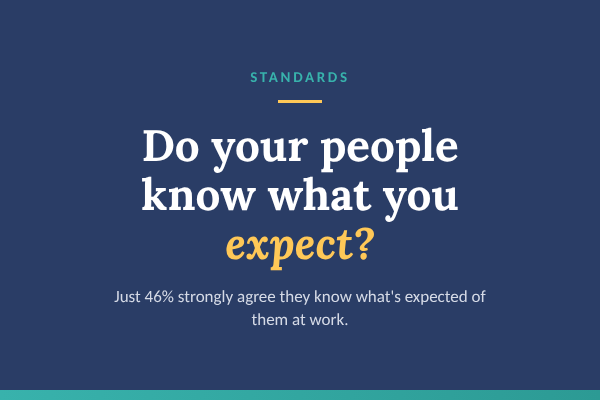
Only 46% of employees strongly agree they know what’s expected of them at work. See the four parts of a clear expectation and how to start.
Effective One-on-One Meetings
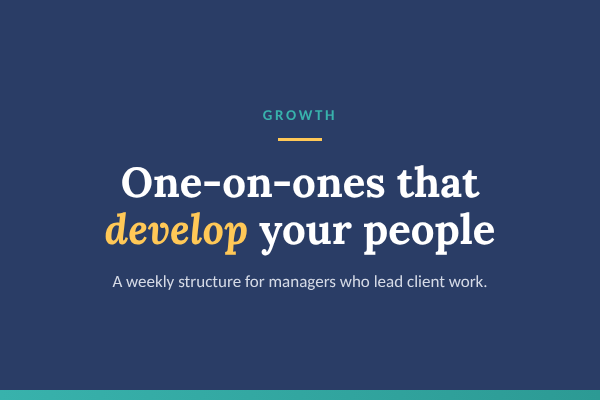
One-on-ones often become status updates. Use a six-part structure and a question bank so each meeting develops the person you lead.
Find out how your leadership is really experienced, and where to start.
Every month without it is another month of working harder without knowing what the people around you need to see. Get your starting point now, and your next assessment will show what changed.
Contact Us
LoyaltyOps™ HQ
430 Hazeldean Road,
Unit #6, Suite 17
Kanata, Ontario, Canada
K2L 1T9
Email: [email protected]
Phone: 1 365-659-4720
Company
Copyright 2025 LoyaltyOps Inc. All Rights Reserved