
Why Hiring More People Doesn’t Fix Your Execution as Your Company Grows
Quick answer: Hiring more people doesn’t fix your execution when your leaders haven’t agreed who decides, how information is shared and who follows up on commitments, because every person you add creates more working relationships than output. A team of 10 has 45 possible pairs to coordinate, and a team of 50 has 1,225. Agree those three first, and practice them yourself.
Key takeaways
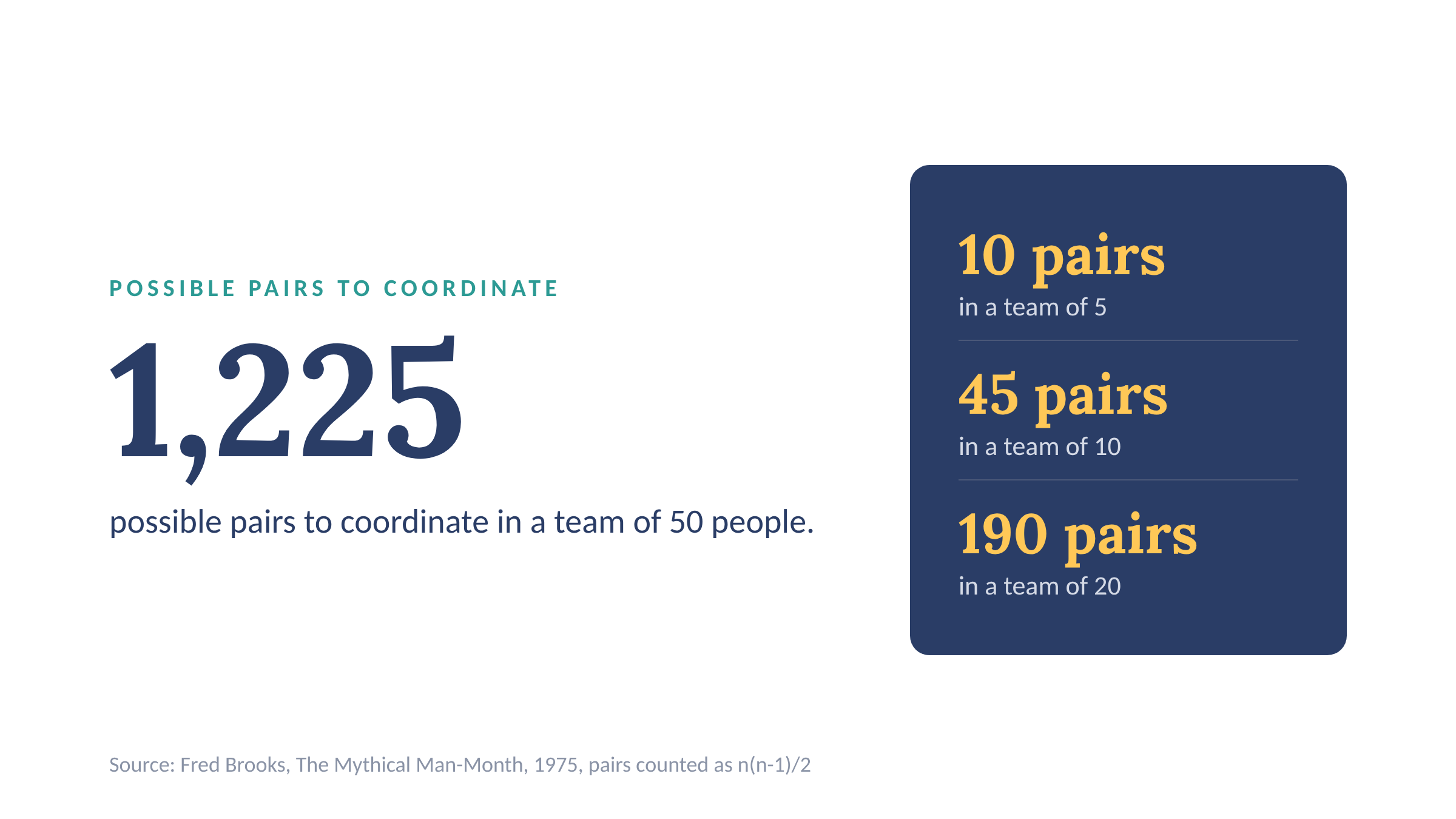
Each person you add creates more working relationships than the last: 10 people have 45 possible pairs and 50 people have 1,225, the count Fred Brooks set out in 1975.
A strong hire who joins before your leaders know who decides what makes good decisions that collide with other good decisions, and brings the decision habits of their last company.
Three gaps can’t be filled by hiring: who decides, how your leaders share what others need to know, and who follows up on commitments.
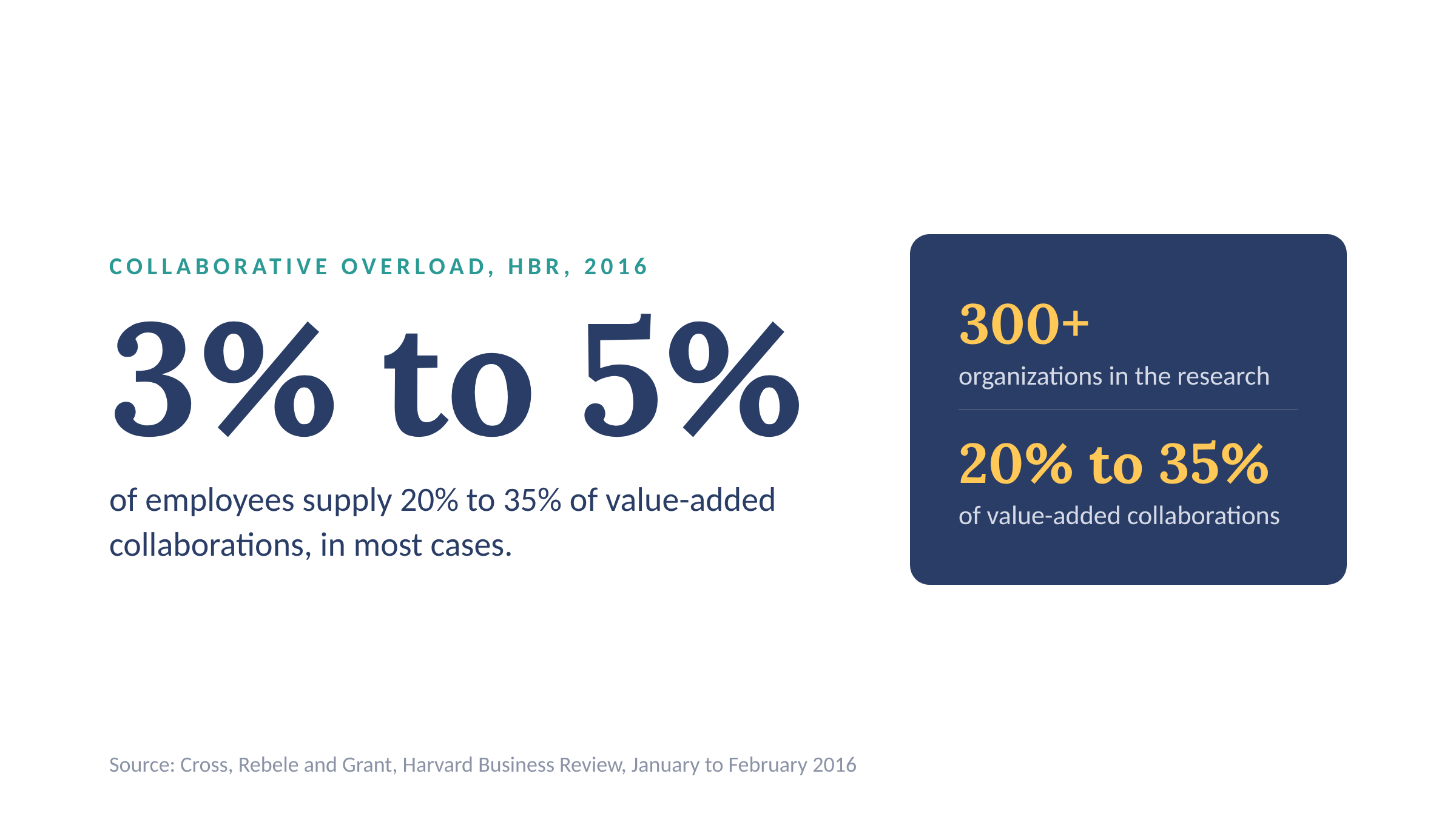
Your strongest people carry those gaps first: Cross, Rebele and Grant found that in most cases, 20% to 35% of value-added collaborations come from only 3% to 5% of employees.
Missed deadlines, conflicting priorities and patchy updates usually share the same cause, so new software or another planning session leaves them in place.
Before your next hiring push, agree decision owners, how updates are shared, a set day to review commitments and the behaviours you expect, and practice each one yourself first.
Why doesn’t hiring more people fix your execution as your company grows?
Hiring gives you more capacity, and every person you add also brings new working relationships, updates and decisions, faster than they add output. When your leaders haven’t agreed how those work, each new hire adds more questions that end with you.
It usually starts with good news. Revenue is climbing, the workload is growing and your leadership team is stretched, so hiring is the obvious move. In a company where your leaders have agreed who decides what and how commitments get followed up, new people settle in quickly, and without those agreements, each new person adds friction.
The numbers grow much faster than your headcount. Fred Brooks set out the count in The Mythical Man-Month in 1975: when each part of the work has to be coordinated with each other part, the effort grows as n(n-1)/2. A team of 5 has 10 possible pairs of people who need to coordinate, a team of 10 has 45, a team of 20 has 190 and a team of 50 has 1,225, so when you double your team, you roughly quadruple the number of conversations the work depends on.
That’s why a company that felt easy to lead at 20 people can feel slow at 50 without anyone doing anything differently, and why your leadership team ends up spending more of its week coordinating than moving the work forward.
If you’re the CEO and every new hire seems to add more questions that end with you, leadership development for CEOs and owners shows you how to develop leaders who agree how decisions, updates and commitments work before the next hiring push, so your week goes to the work only a CEO can do.
Get the free Cultural Standards Builder
What happens when a strong hire joins before your leaders have agreed how work gets done?
A strong hire does strong work inside whatever agreements your leaders already have, and where those agreements are missing, their good work collides with other people’s good work. Talent adds skill, and the number of conversations the work depends on stays the same.
A strong engineer who joins a team with unclear priorities does excellent work on a priority that has since changed. An experienced sales leader who joins before your leaders have agreed how client commitments are made can promise dates your delivery team can’t meet. A skilled project manager who joins a company where nobody knows who decides spends their weeks asking whose call it is.
Each new hire also brings the decision habits of their last company. Some wait to be told, some decide everything themselves, and each habit made sense where they learned it. If your leaders haven’t agreed how decisions get made in your company, each new person fills the gap with what they knew before. Our post on why execution breaks down as your company grows covers the agreements your leaders lose first as your company gets bigger.
Which three gaps can’t a new hire fill for you?
Decision ownership, how information is shared and follow-through on commitments are the three gaps more people can’t fill, because each one depends on an agreement between your leaders.
Who decides
When your leaders don’t know which decisions are theirs, more people means more voices in every decision. Decisions slow down because more people expect a say, your leadership team gets less aligned as it grows, and more of those decisions come back to you.
How your leaders share what others need to know
When nobody has agreed what gets shared, with whom and how often, more people means more messages and less of what matters reaching the people who need it. Updates conflict, context gets lost between teams, and new hires take longer to learn what they need because nothing reliably tells them.
Who follows up on commitments
When follow-through depends on who’s paying attention, more people means less of it. In a small company, everyone knows who committed to what. As your company grows, a commitment made in one meeting is unknown to another department, and the follow-up that used to happen in conversation with you stops happening.
Why do your best people carry these gaps, and why do they leave?
Your strongest people feel the gaps first because they move fastest, and they cover them until they’re worn out. They meet unclear decision authority more than anyone because they’re the ones proposing things, they lose more to missing information because they work further ahead, and they take on the follow-through nobody else is carrying because they’re the people who will.
Research shows how uneven that load can get. In “Collaborative Overload,” published in Harvard Business Review in January 2016, Rob Cross, Reb Rebele and Adam Grant drew on their research across more than 300 organizations: “In most cases, 20% to 35% of value-added collaborations come from only 3% to 5% of employees.” They warn that for the people carrying that load, burnout and turnover become real risks.
For a while, covering the gaps looks like excellence, and it gets rewarded. What it costs you shows up later.
You can’t plan around it
The work gets done and nobody can say how, so you can’t forecast it, staff it or repeat it.
Your risk sits with a few people
Each person covering a gap is the only one who knows how that part of the work gets done, and you find out who those people are when one of them is on holiday.
Your people learn that working around the gap gets rewarded
That’s the behaviour that spreads, and closing the gap stops being anyone’s job.
Your best people wear out
Covering for missing agreements doesn’t end, so it tires people faster than hard work on their own job, and the reward for covering one gap is usually a bigger one.
Mickey Anderson, Co-Founder of LoyaltyOps, said on UNLEASHED: “High performers like hard work. They like being challenged and they like being a contributor. They leave because the system around them makes the work harder than it needs to be.” She added, “When a high performer leaves, the gap they leave behind is rarely what their job description said they owned. It’s what they were actually doing.”
An UNLEASHED episode in which Mickey Anderson explains what your best people notice in the months before they leave.
Why do these gaps look like other problems to you?
The gaps usually show up as something else, so the fix you choose treats the symptom. Missed deadlines look like a project management problem, conflicting priorities look like a strategy problem, and patchy updates look like a tools problem.
Better project software leaves the problem in place when nobody knows who decides, and another planning session leaves it in place when nothing carries context between your teams. When you trace each symptom back, it usually has the same cause: your company added people before your leaders agreed how those people would decide, share information and follow through.
What do your leaders need to agree before your next hiring push, and what do you practice first?
Agree four things with your leaders before or alongside the hiring, and practice each one yourself first, because your leaders and every new hire learn how leadership works in your company by watching you. You can keep hiring while you do it. What matters is that you stop expecting the agreements to sort themselves out after the new people arrive, because the people you hire to fix the problem meet the same gaps on their first day.
1. Give each recurring decision one owner
List the decisions that come up every month and name one owner for each, so your leaders know which calls are theirs, which belong to someone else and how a decision is shared once it’s made. Practice it yourself first: when the next question reaches you that belongs to one of your leaders, send it back to them and let their call stand. The Decision Rights Map helps you sort each decision by who makes it.
2. Agree what your leaders share, with whom and how often
Decide what information moves between teams each week, each month and each quarter, in what form and to whom, so it no longer depends on everyone being in one room. Start with your own updates: tell your leaders what you’ll share with them and when, and keep to it. The Meeting Standards Checklist helps your leaders agree what each meeting is for and what comes out of it.
3. Review commitments on a set day
Give every commitment an owner, an outcome and a date, keep them where all your leaders can see them, and review them on a set day, so follow-through no longer depends on who’s paying attention. Name your own commitments the same way, and say so in front of your leaders when you miss one.
4. Write down the behaviours you expect
Agree how your leaders handle disagreement, give feedback and work across teams, and write each one as a behaviour someone could see. When those are written down, a new hire can learn how leadership works in your company in their first weeks without guessing. Start by writing your own one-sentence definition of a value before your leaders compare theirs.
Before your next hiring push, check honestly whether your company can take on the extra conversations. If decision ownership is already unclear, more people who decide makes it worse, if updates are already patchy, more people sending them adds noise, and if follow-through is already informal, more people making commitments means fewer of them get followed up. If you want evidence of where your own leadership stands first, the Leadership Competency Assessment has you assess yourself while the people who see your work assess you, and 1:1 Leadership Development helps you practice these agreements with your leaders. When you want your leadership team to agree them together, Leadership Team Development develops you and your executives as one team.
Frequently asked questions
Why doesn’t hiring more people fix execution problems?
Hiring adds capacity, and each person also adds working relationships, updates and decisions. A team of 10 has 45 possible pairs who need to coordinate, and a team of 50 has 1,225. When your leaders haven’t agreed who decides, how information is shared and who follows up, those extra conversations slow the work faster than new people speed it up.
How do you know whether your company needs agreements before it needs more people?
Look for four signs: decisions are slowing down, updates vary from team to team, follow-through depends on who’s paying attention, and new hires take a long time to contribute. If you see most of them, more people will add to the problem. Agree decision owners, how updates are shared and when commitments are reviewed before your next hiring push.
Why do your best people leave when your company grows quickly?
Your strongest people often leave because they’ve been covering the gaps. They meet unclear decision authority and missing information more than anyone because they move fastest, and they take on follow-through nobody else carries. Cross, Rebele and Grant found that in most cases, 3% to 5% of employees supply 20% to 35% of value-added collaborations, and that load wears people out.
Should you stop hiring until your leaders agree how the work gets done?
You can keep hiring. Agree decision owners, how information is shared, when commitments are reviewed and the behaviours you expect alongside the hiring, before each new group starts. Begin with the gap your company feels most, and practice it yourself first, because new hires learn how leadership works in your company by watching you and your leaders.
Where should a CEO start before a hiring push?
Start with decision ownership, because it’s usually the gap that slows your company most visibly and the quickest to show a change. List the decisions that come up every month, give each one owner, and send the next question that belongs to one of your leaders back to them. Then agree how updates are shared and when commitments are reviewed.
Find out what your leaders need to agree before you hire again
If every new hire seems to add more questions that end with you, a conversation with us can help you find which agreement your company is missing and what to practice first.
Sources
Brooks, F. P., Jr. The Mythical Man-Month: Essays on Software Engineering. Addison-Wesley, 1975. Chapter 2, “The Mythical Man-Month.”
Cross, R., Rebele, R., and Grant, A. “Collaborative Overload.” Harvard Business Review, January to February 2016. Research across more than 300 organizations. https://hbr.org/2016/01/collaborative-overload
Related episode: UNLEASHED by LoyaltyOps, “Why Your Best People Leave and What It’s Really Telling You,” April 1, 2026. https://youtu.be/JDBgTgNfFZk