
Managing a BPO Team: How Your Leaders Make an Outsourced Team Part of the Work
Managing a BPO Team: How Your Leaders Make an Outsourced Team Part of the Work
Managing a BPO team, the people a business process outsourcing provider employs to do work for you, depends on your leaders as much as the contract. The provider manages the people, and your leaders lead the work. Write your standards down, agree on commitments both companies keep, and explain the reasons for the work.
Key takeaways
In Deloitte’s 2024 survey of more than 500 leaders, 96% of organizations use third-party outsourcing.
70% of executives say they’ve brought some work a provider used to do back in-house, often for more control over quality.
The provider employs and manages the people, and your leaders set the direction, standards and feedback for the work.
Write your standards down with real examples, since a provider’s team can’t learn them by watching your leaders.
Agree commitments both companies keep, with an outcome, an owner and a date for each one.
What does managing a BPO team involve?
Managing a BPO team means leading the work a provider’s people do for you while the provider employs them. Advice on outsourcing tends to cover contracts, tools and service levels, and this post covers how your leaders lead the people doing the work.
Outsourcing is now a normal part of how organizations get work done. In its Global Outsourcing Survey 2024, Deloitte surveyed more than 500 business and technology leaders, including more than 150 C-suite executives, and found that 96% of their organizations use third-party outsourcing and 78% use global in-house centres, which are teams a company owns, often in another country. The report doesn’t break its results out by company size, so read them as a direction for your own organization.
The same survey found that 70% of executives had brought some work a provider used to do back in-house. Deloitte reports that the leading reasons included better control over service quality and performance, and growing skills inside the company. The report also lists integrating services among the top challenges organizations face in sourcing talent, and ties it to the maturity of their own governance and management.
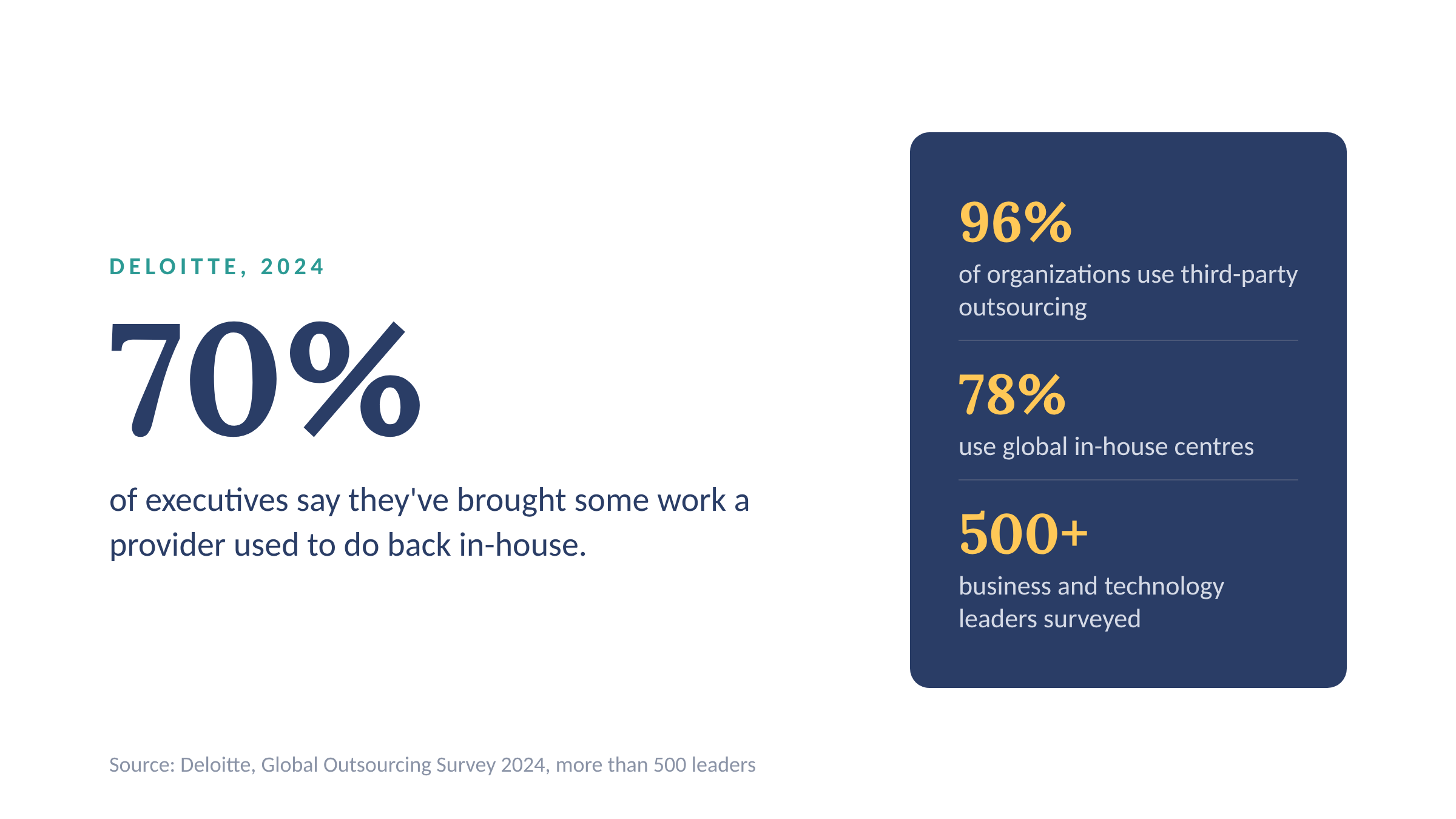
Deloitte, 2024: 70% of executives have brought some outsourced work back in-house, and 96% use outsourcing.
Before co-founding LoyaltyOps, Mickey Anderson worked with offshore and talent companies and the organizations that relied on their teams. The moves in this post draw on that work and on the research cited here.
Get the free Accountability Standards Builder
Who manages a BPO team, the provider or your leaders?
The provider employs and manages its people, and your leaders lead the work those people do for you. Agree on that split in writing at the start, so no one at either company has to guess who decides.
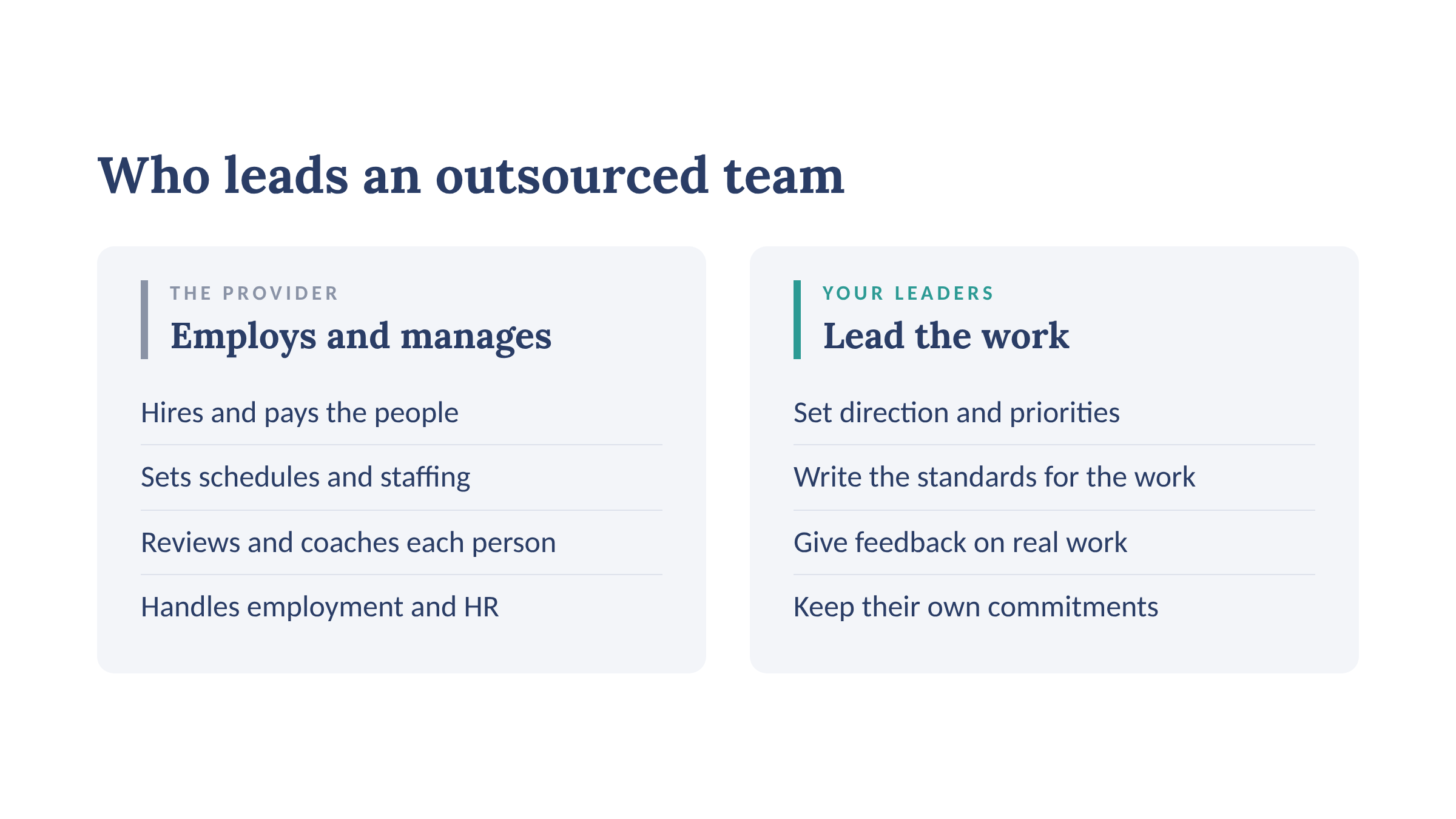
Who leads an outsourced team: the provider employs and manages the people, and your leaders lead the work.
The provider hires, pays, schedules and reviews its people, and its own team leads coach them day to day. Your leaders set the direction for the work, the standards it has to meet and the feedback on how it’s going, and they decide the priorities. When the split isn’t written down, two problems tend to follow. Your leaders give instructions to agents directly and the provider’s team leads don’t know what was asked, or your leaders leave the work to the contract, and the team learns your standards only from complaints.
Name one leader in your organization who owns the relationship with the provider’s team, and one person at the provider who owns it for them. The two of them talk each week, agree what’s changing and decide what needs a more senior decision.
How do you set standards for an outsourced customer service team?
Write your standards down as behaviours the team can see and copy, since a provider’s team can’t learn them by watching your leaders. Then review real work against them each week.
People inside your organization learn many standards without anyone writing them down, from what their manager praises, what gets fixed and what gets ignored. A team another company employs gets little of that. It hears from your organization through a contract, a service level report and the occasional escalation, so the standards it learns are the ones someone wrote down.
To set the standards:
Pick three to five standards that matter most to your customers, such as how a refund request is handled or how quickly a complaint reaches your own team.
Write each one as a behaviour, with an example of good work and an example of poor work, taken from real calls, tickets or files.
Share them with the provider’s team leads and agents, and explain why each one matters.
Review a handful of real examples with the provider’s team leads each week, and rewrite a standard when the examples show it’s unclear.
Our post on turning values into behaviours shows how to write a standard as a behaviour people can see. Your own leaders have to follow the standards too. A leader who asks for replies by the next business day and takes a week to answer the team’s questions teaches the provider’s team which standard is real.
How do both companies agree commitments and keep them?
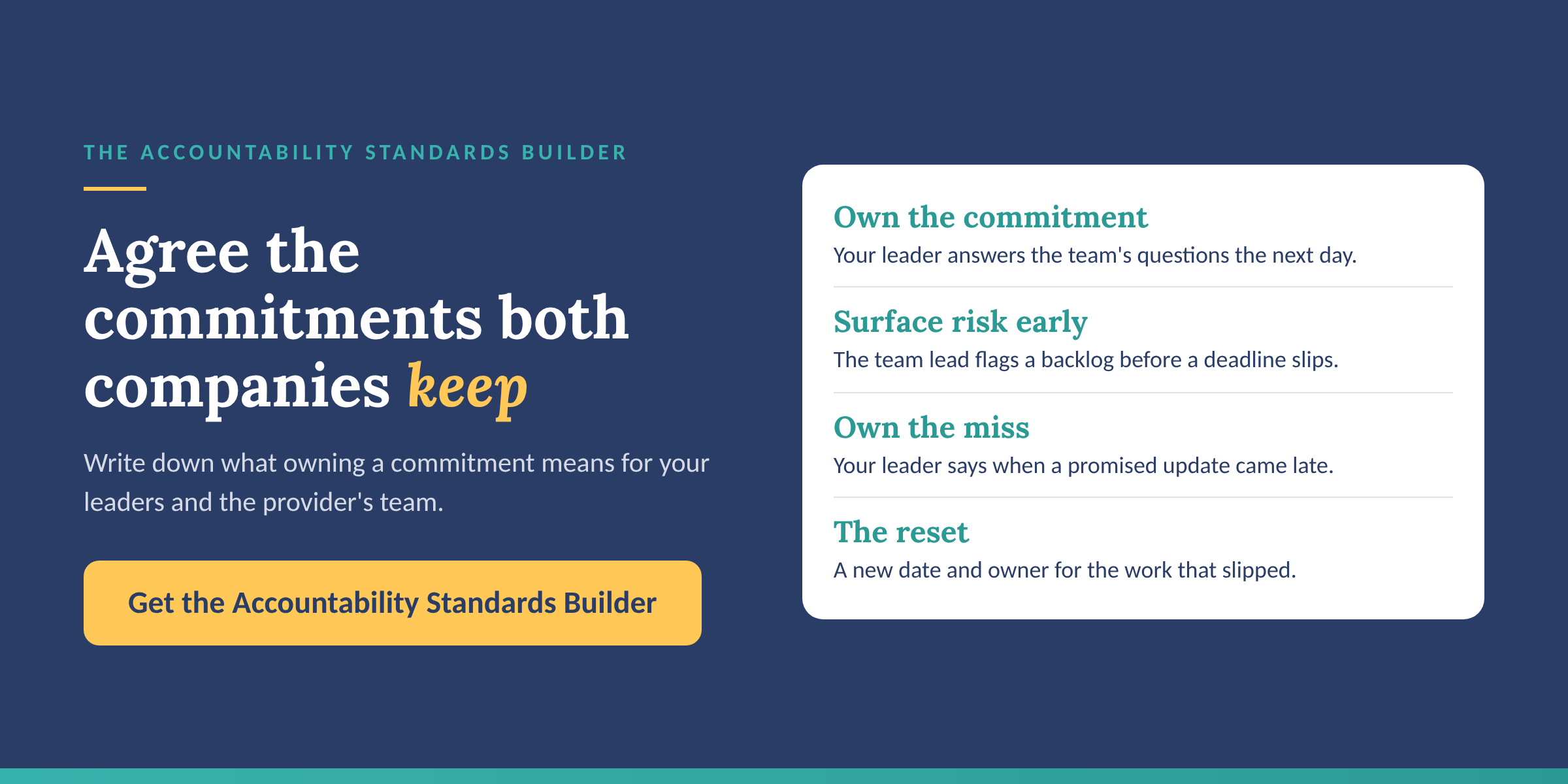
Agree each commitment with an outcome, an owner and a date, at both companies, and agree how each company raises a risk and what happens after a miss. Accountability works when both companies agree the commitments, and it fails when each company assumes what the other meant.
Commitments in an outsourced relationship go both ways. The provider’s team commits to results, and your leaders commit to what the team needs to deliver them: answers to questions, approvals, updated product information and decisions on exceptions. When your leaders miss those, the team’s results suffer, and the provider’s team may not say so.
Agree four things with the provider’s team leads:
Own the commitment. Each commitment has an outcome, an owner and a date. For example, your leader answers the team’s questions the next day.
Surface risk early. Either company raises a risk as soon as confidence drops. For example, the team lead flags a backlog before a deadline slips.
Own the miss. A miss gets named plainly by whoever made it. For example, your leader says when a promised update came late.
The reset. After a miss, the two leads agree a new date and owner for the work that slipped.
Our post on agreeing accountability standards covers how each person owns a commitment and how colleagues help each other keep the standard.
How do you include the provider’s team in the reasons for the work?
Tell the provider’s team why the work matters and what’s changing, as well as what to do. People who know the reason can make good calls on the cases their instructions don’t cover.
Work shared by two companies has much in common with work shared by two functions. In a study of 95 teams in 25 leading corporations, published in Harvard Business Review in June 2015, Behnam Tabrizi found that nearly 75% of cross-functional teams were dysfunctional. Projects with strong governance support, from a senior cross-functional group or a single senior executive champion, succeeded 76% of the time, against 19% for projects with moderate support.
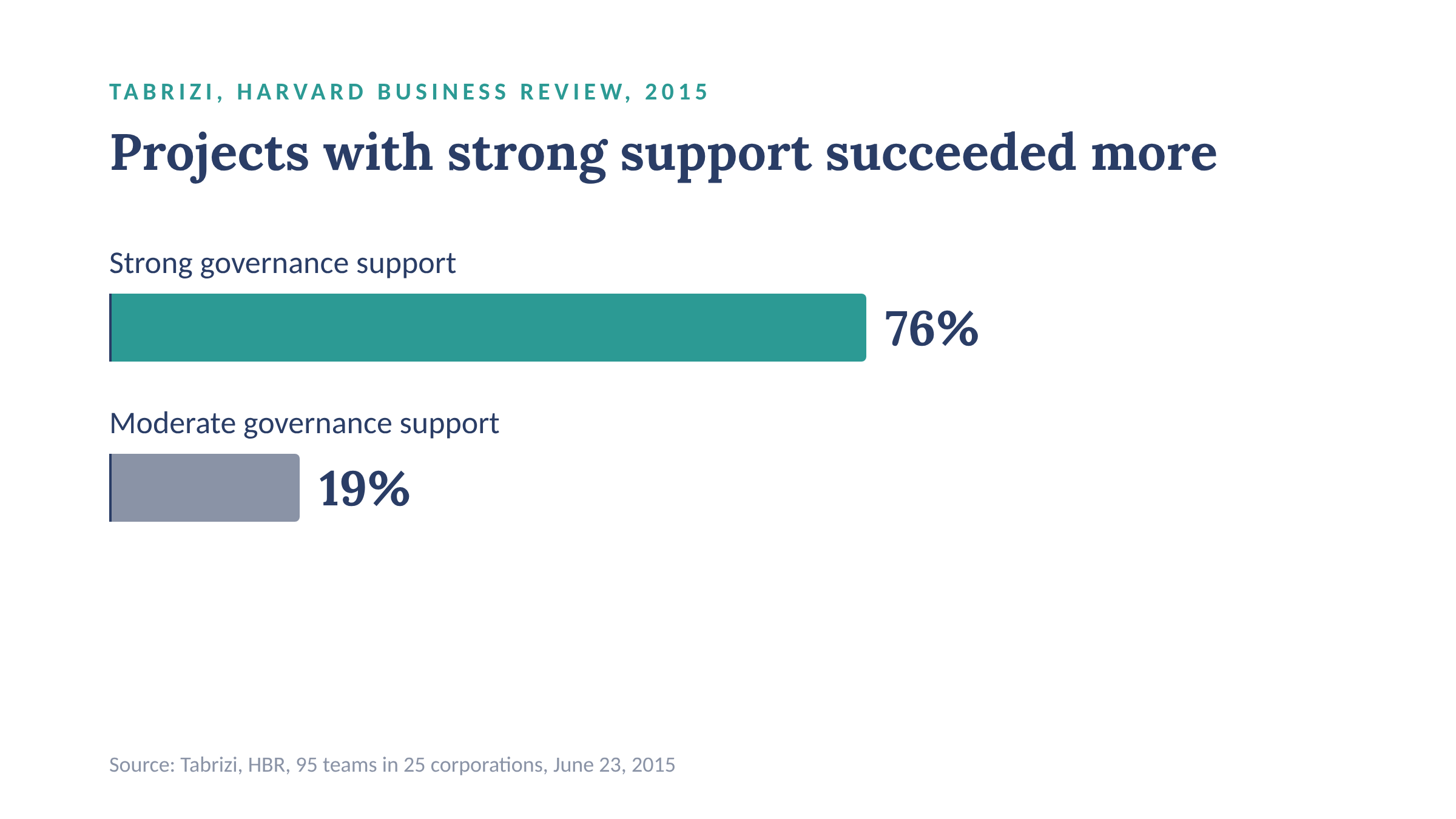
Tabrizi, HBR, 2015: projects with strong governance support succeeded 76% of the time, against 19% with moderate.
For an outsourced team, that support starts with the leader who owns the relationship sharing the context. Before the team starts on a change, send the provider’s team leads a short brief covering the objective and why it matters now, what’s been tried, what each team is already doing, the resources available and the limits, and the assumptions no one has tested. Ask the team leads to share the reasons with their agents along with the new steps.
Related UNLEASHED episode: Mickey Anderson on why cross-functional teams fall short, and the conditions that help leaders plan work together.
What do leadership competencies have to do with managing a BPO team?
A leadership competency describes one part of good leadership as behaviours other people can see. Naming the competencies that matter for an outsourced team tells your leaders what to practice with a team they don’t employ.
Our Leadership Competency Model describes ten competencies, and the Leadership Competency Assessment scores each leader on them, from the leader’s own view and from observers who work with them. Naming the competency turns “the provider’s team doesn’t get it” into something your leaders can practice and score again in six months. Four matter most for leaders working with a provider’s team:
Sets Clear Direction. The provider’s team knows what your organization is working toward this quarter and why, so agents can make good calls on cases their instructions don’t cover.
Lives the Standards First. Your leaders meet the standards they ask of the provider’s team, including how quickly they answer and how they speak about customers.
Makes Expectations Clear. Each standard is written down with examples, and the provider’s team leads know which decisions they can make without asking.
Builds Ownership and Accountability. Both companies agree commitments with an owner and a date, and your leaders respond to a missed commitment calmly and consistently.
How can you tell whether your leaders are ready to lead a team another company employs?
Look at whether your leaders already do with their own teams what a provider’s team will need from them. Leaders who lead their own people in writing and by example tend to bring those habits to a provider’s team.
Ask four questions about each leader who will work with the provider:
Can they name, in writing, the three to five standards that matter most for this work?
Do they explain the reasons for a change as well as the steps?
Do they keep their commitments to the people who depend on them, including answers and approvals?
Do they give feedback on real work every week, and ask for it in return?
If a leader’s own team already works in more than one place, many of the same practices apply, and our post on leading remote teams covers them.
What does managing a BPO team look like in an organization of 30 to 300 people?
In an organization of 30 to 300 people, an outsourced team can be as large as one of your own departments, and the leader who owns the relationship often has another full-time role. Agree as a leadership team who owns each provider relationship, how much of that leader’s week it takes, and which standards apply to every provider. Our Leadership Workshops give your leaders a shared way to agree standards and commitments, and they can use the same practice with the provider’s team leads.
Frequently asked questions
How do you integrate an outsourced team?
Integrate an outsourced team by agreeing who leads what, writing your standards down with examples, and agreeing on commitments both companies keep. Name one leader who owns the relationship, meet the provider’s team leads each week, and explain the reasons for any changes and the steps. The provider employs the people, and your leaders lead the work they do for you.
Who manages a BPO team, the provider or the client?
The provider manages employment: hiring, pay, schedules, reviews and day-to-day coaching. The client’s leaders lead the work: direction, the standards the work must meet, feedback on real examples, and decisions about priorities. Write that split down at the start, and name one leader at each company who owns the relationship, so neither team has to guess who decides.
How do you hold an outsourced team to your standards?
Write three to five standards as behaviours, with examples of good and poor work taken from real calls, tickets or files. Share them with the provider’s team leads and agents, explain why each one matters, and review real work with the team leads each week. Your own leaders have to meet those standards too, since the provider’s team learns from what they do.
Why do BPO teams have high turnover?
Turnover in an outsourced team has many causes, and several are the provider’s to manage, including pay and schedules. Your leaders can still make the work clearer and fairer by setting written standards, explaining changes, answering questions promptly, and giving feedback on real work. Ask the provider for the turnover on your team and review it together each quarter.
Lead your outsourced team as part of the work
If an outsourced team’s work hasn’t matched what your leaders expected, a conversation with us can help you agree who leads what and the standards both companies work to. LoyaltyOps is a leadership development firm that develops individual leaders and leadership teams against clear leadership competencies, so performance improves across your organization.
Sources
Aneja, K., Coronado, J., and Stoler, M. “Global Outsourcing Survey 2024: Multidimensional sourcing: Orchestrating the extended workforce ecosystem.” Deloitte, 2024 (no date shown on the page). https://www.deloitte.com/us/en/services/consulting/articles/global-outsourcing-survey.html
Tabrizi, B. “75% of Cross-Functional Teams Are Dysfunctional.” Harvard Business Review, June 23, 2015. https://hbr.org/2015/06/75-of-cross-functional-teams-are-dysfunctional
Related episode: UNLEASHED by LoyaltyOps, “Why Most Cross-Functional Teams Fall Short,” October 1, 2026. https://youtu.be/e9dG2rr2VU4