
Frequently Asked Questions for CEOs and Founders
These are the questions we hear most often from CEOs and founders of companies between thirty and five hundred employees.
If your organization has outgrown informal operations and you are experiencing decision bottlenecks, inconsistent execution, or accountability that depends on personality rather than systems, the answers below will help you understand whether leadership infrastructure is the right next step.
Understanding the Problem
How do I know if my leadership team needs operational infrastructure?
There are consistent signals. Decisions slow down because they funnel through you or one or two senior leaders. The same issues resurface quarter after quarter despite being addressed. Accountability depends on which leader is involved rather than a shared standard. Meetings produce discussion but not documented decisions or follow-through. New hires take longer to become effective because the operating norms are informal and must be learned by observation. If three or more of these are present, the organization has outgrown its informal operating model and needs documented, practiced infrastructure.
We already have a strong culture. Why do we need written standards?
Strong culture and written standards are not competing ideas. A strong culture is exactly what you want to protect. The risk is that as the organization grows, the culture that exists in the founder's behavior becomes diluted because new leaders and new hires interpret it differently. Written standards capture the behavioral expectations that define your culture so they can be practiced consistently by everyone, not just the people who have been around long enough to absorb them informally.
My team is talented. Is the problem really the system and not the people?
In most cases, yes. Talented people operating without clear decision-making frameworks, accountability agreements, and communication standards will produce inconsistent results because each person is applying their own interpretation of how things should work. The inconsistency is not a talent problem. It is an infrastructure problem. Installing operational standards allows your talented people to perform at their best because the system supports them rather than leaving them to figure it out individually.
We set good quarterly goals but keep missing them. What is going wrong?
Most organizations that miss quarterly goals do not have a goal-setting problem. They have an operating problem. Priorities drift by mid-quarter because urgency displaces importance. Decisions stall because ownership boundaries are unclear. Commitments are made without structure and slip without consequence. The goals were sound. The operational behaviors that determine whether goals are achievable were never addressed. Leadership infrastructure closes the gap between planning and execution.
Understanding LoyaltyOps
What exactly does LoyaltyOps install in my organization?
LoyaltyOps installs the leadership operating system beneath your strategy. This includes written standards for how decisions are made and escalated, how meetings are structured and followed through on, how commitments are made and kept, how feedback moves through the organization, how priorities are protected from urgency, and how the team reviews and improves its own performance each quarter. Each standard is defined by your leadership team through facilitated sessions and documented in your Founding Document System.
How is LoyaltyOps different from EOS, Scaling Up, or other operating systems?
Most business operating systems focus on strategic planning: setting vision, defining priorities, and establishing meeting rhythm. LoyaltyOps focuses on the behavioral layer beneath strategy: how the team actually operates while pursuing those priorities. It installs the decision-making frameworks, accountability agreements, communication standards, and performance cadences that strategic planning assumes but does not prescribe. LoyaltyOps can work alongside EOS, Scaling Up, or OKRs by strengthening the execution layer.
Is this a consulting engagement or a system I own?
You own the system. LoyaltyOps is installed through a structured engagement, but the standards, frameworks, and practices belong to your organization. Every tool is documented in your Founding Document System. Your leadership team defines the standards through facilitated sessions. The goal is to build internal capability, not ongoing dependency. After installation, your team operates the system independently.
What does the 90-Day Operational Sprint look like?
The 90-Day Operational Sprint is the standard installation timeline. During the first phase, the leadership team defines its core standards: Clear Intent, Cultural Standards, Meeting Standards, and the Founding Document System. During the second phase, the team installs communication and decision-making tools: Back Briefs, Feedback Loops, and Decision Ownership and Escalation. During the third phase, the team installs accountability, prioritization, and the Quarterly Performance Cadence. By day ninety, the full operating system is installed and the team is practicing it.
Practical Concerns
How much of my leadership team's time does this require?
Each tool is installed through a Define Session that typically runs thirty to sixty minutes. Over the ninety-day sprint, the total leadership investment is approximately ten to fifteen hours of facilitated working time spread across the quarter. This is significantly less time than the hours currently lost to unproductive meetings, relitigated decisions, and accountability gaps. The system saves leadership time by the second month.
What if my team resists structure?
Resistance to structure usually means resistance to imposed structure. The LoyaltyOps approach is different because the leadership team defines its own standards through facilitated sessions. They are not adopting someone else's rules. They are writing their own. When people build the agreements themselves, adoption follows naturally because the standards reflect how they want to operate, not how someone told them to.
How quickly will I see results?
Most organizations see measurable changes within the first thirty days. Meeting quality improves immediately when Meeting Standards are installed. Decision speed increases when Decision Ownership and Escalation is defined. Accountability becomes more consistent when commitments have explicit structure. The full system compounds over ninety days and continues to strengthen each quarter as the Quarterly Performance Cadence produces ongoing behavioral improvements.
What size company is this designed for?
LoyaltyOps is designed for companies between thirty and five hundred employees. This is the range where the organization has outgrown informal operations but is not yet large enough for a full corporate infrastructure department. The founder or CEO is typically still involved in operational decisions, and the leadership team is small enough to define shared standards in a room together.
Does this work for remote or hybrid teams?
Yes. The tools are designed around written standards and structured practices rather than physical proximity. Decision Ownership and Escalation, Accountability Standards, Meeting Standards, and the communication tools work equally well in remote, hybrid, and in-person environments. The Founding Document System becomes even more valuable for distributed teams because the standards are documented and accessible rather than dependent on informal in-person communication.
Investment and Outcomes
What does leadership infrastructure actually cost my company when it is missing?
The cost shows up in several ways: leadership hours lost to relitigated decisions, meetings that produce no outcomes, and accountability follow-up that the CEO handles personally. It shows up in missed quarterly goals caused by priority drift. It shows up in longer onboarding times for new leaders who have to learn informal norms. It shows up in employee turnover driven by inconsistent standards. Most organizations estimate the cost at tens of thousands of dollars per quarter in lost productivity and missed opportunity once they quantify it.
How do I measure the ROI of leadership infrastructure?
The most direct measures are: reduction in time the CEO spends on operational decisions that should be handled at the team level, improvement in quarterly goal completion rate, reduction in the number of decisions that are relitigated, faster onboarding time for new leaders, and improved consistency in meeting quality and follow-through. The Quarterly Performance Cadence provides a built-in measurement mechanism by reviewing behavioral improvements each quarter.
What happens after the 90-Day Sprint is complete?
The organization owns the full operating system and runs it independently. The Quarterly Performance Cadence creates a built-in rhythm for ongoing improvement. Some organizations choose to continue working with a Performance Advisor for quarterly facilitation and coaching. Others run the system entirely internally. The infrastructure is designed to be self-sustaining once installed.
How do I get started?
The first step is a Discovery Call where we assess your organization's current operational state, identify the highest-leverage gaps, and determine whether the LoyaltyOps system is the right fit. There is no commitment required for the initial conversation.
A Structured Path to Operational Clarity.
3 Easy Steps To Get Started
1. Start with a Discovery Conversation
We begin with a focused conversation to understand where execution is breaking down and whether LoyaltyOps is the right fit. The right fit matters more than a fast close.
2. Define the Operational Gap
We work with your leadership team to identify the specific operational friction costing the most: decisions that slow down, standards that vary, accountability that softens under pressure.
3. Install the Structure
We guide your leadership team through a structured process to define, model, and embed the operational frameworks that close the gap. Execution becomes reliable. Performance stops depending on the same handful of people.
Contact Us
LoyaltyOps™ HQ
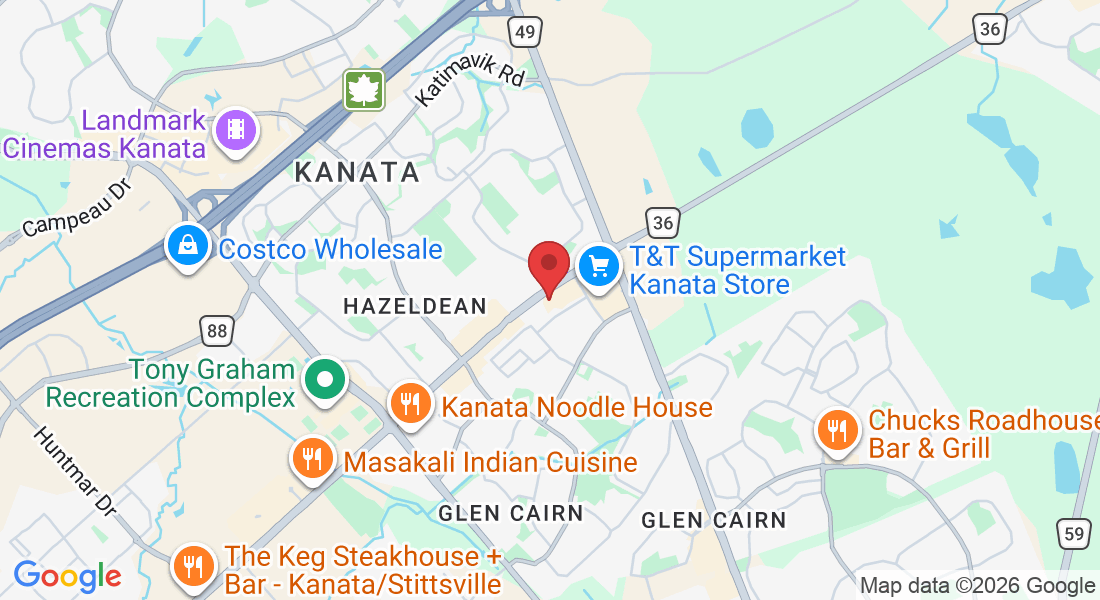
430 Hazeldean Road,
Unit #6, Suite 17
Kanata, Ontario, Canada
K2L 1T9
Email: [email protected]
Phone: 1 365-659-4720
Facebook
LinkedIn
Youtube