
Why Work Comes Back Wrong (and How to Fix It)
Why Your Team's Work Comes Back Wrong Even When Everyone Agreed
You had the conversation. You explained the priority, set the deadline, named the decision, and asked if there were any questions. There weren't, so you moved on. Then, days later, the work comes back, and it isn't what you asked for. The deadline meant something different to them. The priority got read two ways. The decision you made means one thing to you and another to the person who did the work.
Nobody pushed back in the room, so everyone assumed they were aligned. But the gap was there the whole time, and it only showed up later, as rework, a missed deadline, and the cost of doing it twice. Here's why that keeps happening, and the one-minute habit that fixes it.
Why does work come back wrong when everyone agreed?
Because agreement in the room and shared understanding aren't the same thing. When you explain something and the other person nods, the nod means they believe they understood you. It doesn't mean they understood the same thing you were picturing. They usually did understand something, just not always the exact something you meant.
That gap is invisible at the time, which is what makes it dangerous. Everyone leaves the conversation feeling aligned, and the misunderstanding only surfaces once someone has built on it. By then it's expensive, because the work is already done, and now it has to be redone.
Why doesn't explaining it again fix it?
The natural response is to explain more. You write a longer brief, repeat the priorities, and ask again if anything is unclear. And you still end up with the same gaps.
The reason is simple: hearing you explain something is not proof that the other person understood it the way you meant. More explanation from you doesn't close the gap, because the gap isn't about how much you said. It's about whether their picture of the work matches yours, and you can't see their picture from your side of the conversation. Asking "does that make sense?" doesn't help either, because people say yes when they believe they got it.
The only way to know they understood
There's exactly one way to check whether the two of you share the same understanding: hear them say it back to you, in their own words.
When someone plays the work back in their own words, you can hear the gap immediately. The deadline they repeat isn't the one you set. The outcome they describe is close but aimed at the wrong target. The next step they name skips something you assumed was obvious. In ten seconds of listening, you catch the exact misunderstanding that would otherwise have cost a week, and you close it with one sentence, before any work is built on it.
The one-minute habit: ask them to play it back
This is the whole idea behind a habit called Back Briefing. Right after a decision, a priority, or a request, you ask the person taking on the work one question: what do you understand the decision, priority, or next step to be? Then you listen for the gap.
A good playback covers four things: the request said back in their own words, the outcome you're both aiming for, the next step they'll take, and who owns it by when. It costs about a minute. Most of the time you hear it and it's right, and you both move on with real confidence instead of assumed confidence. Some of the time you hear a gap, and that minute just saved you days.
When should you use it?
You don't need to do this for every small exchange; that would just be noise. Run it at the moments where being misread is expensive:
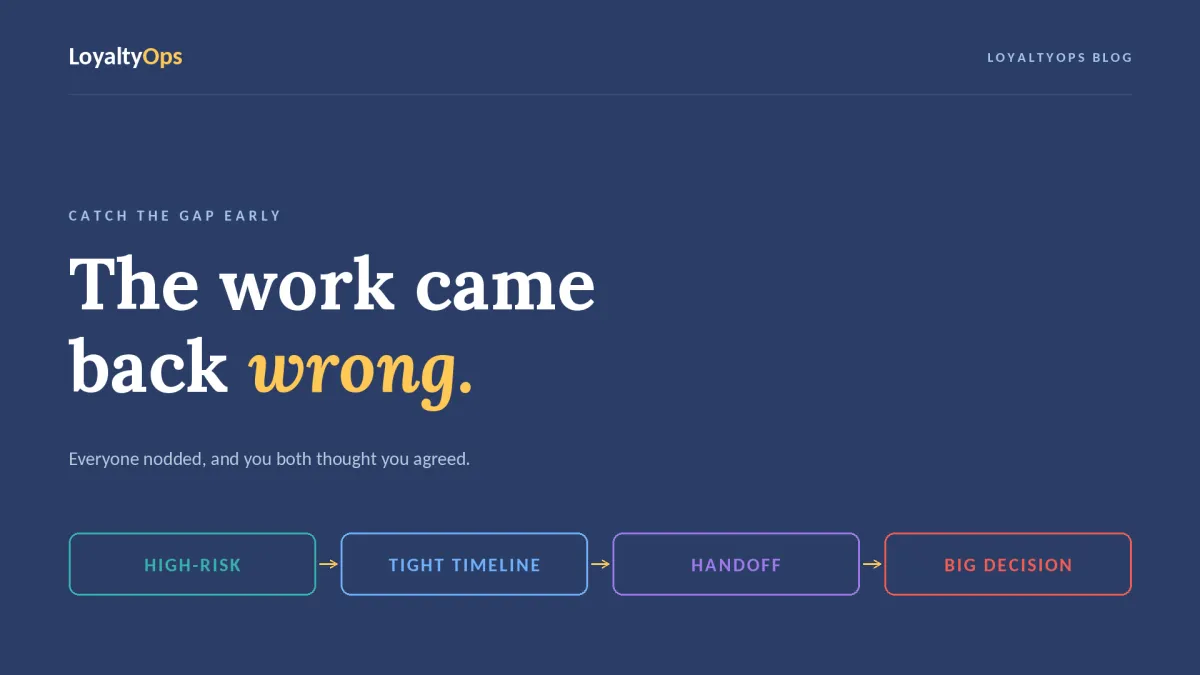
High-risk delegation, where the work is complex or high-stakes and costly if it's misread.
Tight timelines, where there's no room to redo the work before the deadline.
Cross-functional handoffs, where work moves between teams or functions.
Strategic decisions, where one decision will shape many that follow.
Try it on your next important handoff. Before the person starts, ask them to play back their understanding, and close any gap in a sentence while it still costs you nothing. One good playback is usually all it takes to feel why the habit is worth it.
A quick example
Say you ask a team lead to tighten up onboarding. It feels like a clear request, they nod, and you both move on. But instead of trusting the nod, you ask them to play it back, and they say: "I'll cut onboarding from five days to three by month end. I own it, and we'll know it worked when new hires finish setup without a support ticket." In that one sentence you hear a deadline you never set. You meant make it smoother, not cut it to three days by month end. Ten seconds of listening just saved a month of work aimed at the wrong target, and you fix it with a single clarifying sentence.
What changes when you check first
Once checking understanding becomes a habit at the moments that matter, a few things shift. Rework drops, because the misreads get caught before anyone builds on them. Delegation feels lighter, because you hand off work knowing it was actually understood, not just heard. And you stop re-explaining the same thing three times, because the first explanation is confirmed instead of assumed. The work goes out clear and comes back closer to right, which is the whole point of explaining it in the first place.
Catch the gap before the work starts
If work keeps coming back not quite right, the fix is a one-minute habit of hearing it played back before it starts. Our free Back Briefing Guide gives you the one question to ask, the four moments to use it, and the exact words to use when a gap shows up.
→ Download the free Back Briefing Guide: loyaltyops.com/back-briefing
FAQ
Why does work come back wrong even when everyone agreed?
Because a nod means someone believes they understood you, not that they understood the same thing you meant. The misunderstanding is invisible in the moment and only shows up once someone builds on it. Hearing the person play the work back in their own words is what catches the gap early.
Why doesn't explaining it more clearly fix it?
Because the gap isn't about how much you said; it's about whether their picture matches yours, and more explanation from your side can't reveal that. The only reliable check is to hear them say it back, so you can compare their understanding to what you meant.
How do I make sure someone understood my instructions?
Ask them to play back their understanding in their own words before they start: what they're doing, the outcome you're aiming for, the next step, and who owns it by when. Listen for anything that doesn't match, and clarify it in a sentence.
Isn't asking people to repeat things back a bit patronizing?
Not if you frame it as checking your own clarity. A line like "before we wrap, can you play it back so I know I was clear?" puts the responsibility on you, not on them. Done that way, it reads as care, not a test.
When should I check understanding like this?
At the moments where being misread is costly: complex or high-stakes delegation, tight timelines with no room for rework, handoffs between teams, and decisions that will shape many others. Using it everywhere is noise; using it at those moments is where it pays off.